







November 2022: the month of absolute sales
It's the perfect time to increase sales in your shop. Users are more willing to take part in various types of promotional campaigns, use discount codes and sign up to exclusive access lists to get good discounts on their favourite products.
November is a month when you can achieve very good results in a short time. However, you need to keep precise calculations in mind, because it's easy to end up in the red. When starting promotional activities, we have to remember that when the margin drops, the target ROAS needs to increase proportionally. The decision to raise the budget has to be factored into the calculations, because it's an extra cost covered from profit. A result like this doesn't come from a single promotion, but from a calendar of activities planned well in advance, put together by a marketing agency.
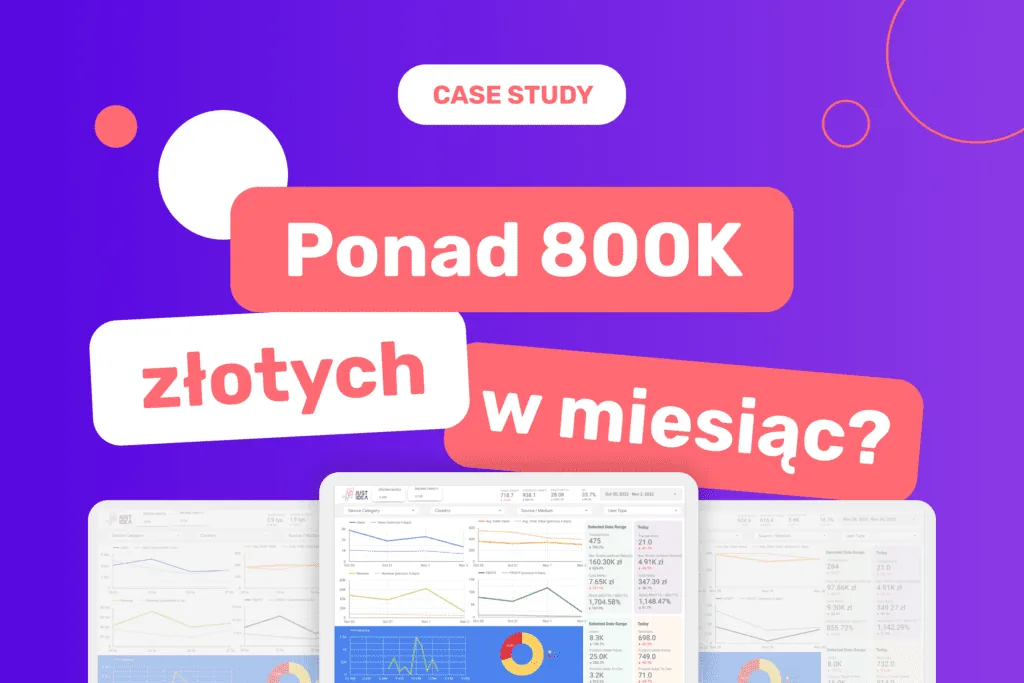
At our agency, we use specially designed dashboards in Google Looker Studio (formerly Google Data Studio), which calculate all the parameters we need to optimise campaign profitability in real time. Thanks to this integration, we can easily collect data such as advertising costs, the number of orders or their status.
How we generated over €180,000 in turnover and €23,000 in profit using a layered promotion system
We calculate profit taking into account agency costs, advertising costs, and the average return rate at an average annual level of 13.5%, excluding VAT, before income tax.
We're presenting the results using a Polish clothing brand that has been on the market for just under 4 years as an example. This year we prepared a strategy based on building steady sales growth across the whole month, rather than just a one-off weekend peak.
For this purpose, we prepared price-reduction segments: each promotion had a different character and was aimed at a different type of customer. This paid off with an average ROAS of 958.64%. Compared to the previous month, we recorded sales growth of 112.8%. It's worth noting that the average basket value dropped by only 3.63%. That's a very good result, given price cuts of up to 70%.
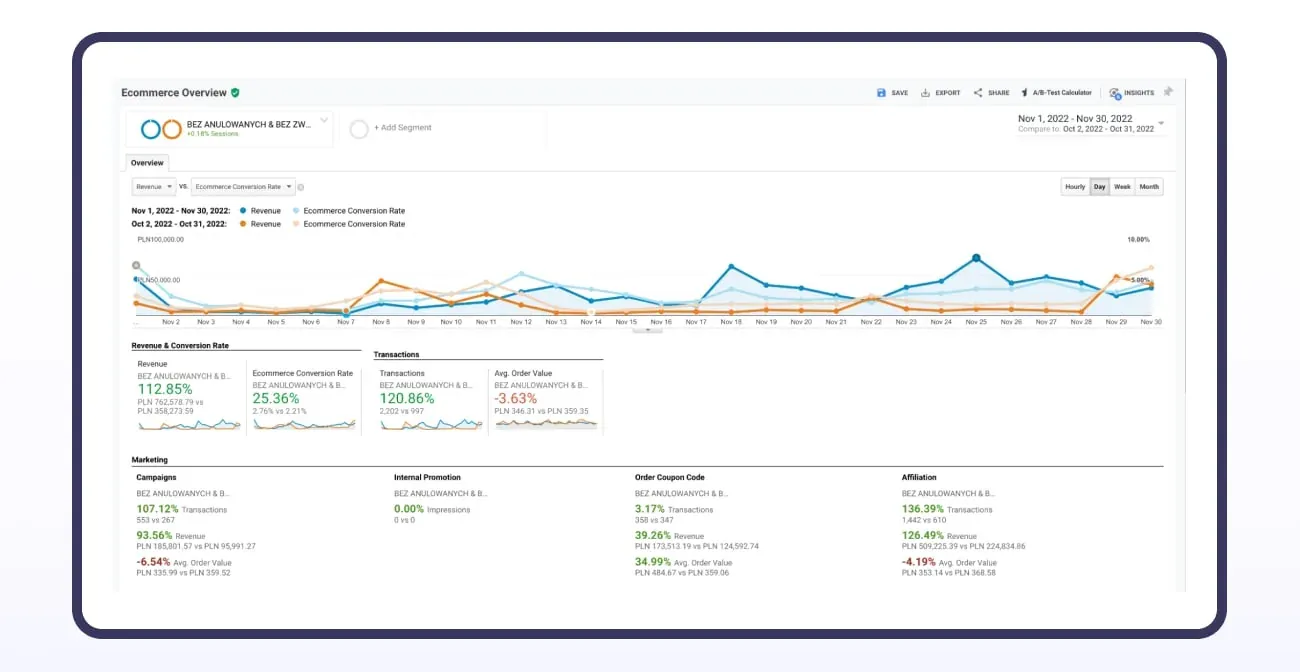
Each of the campaigns we prepared deserves its own discussion.
STAGE I: HALLOWEEN
The Polish All Souls' Day (a Polish holiday commemorating the dead) isn't a day around which it's easy to build a promotional offer. Halloween is a much better opportunity for advertising, and we based our messaging around it. The promotion was aimed mainly at new users, meaning ones who had never been on the shop's website before. This let us build interest around the brand and draw the attention of a new segment of customers on the market. These activities translated into a very decent turnover (for the start of November) of almost €37,000.
With a 30% discount, and taking the average return rate into account, the profit from this campaign came to a tidy €6,400.
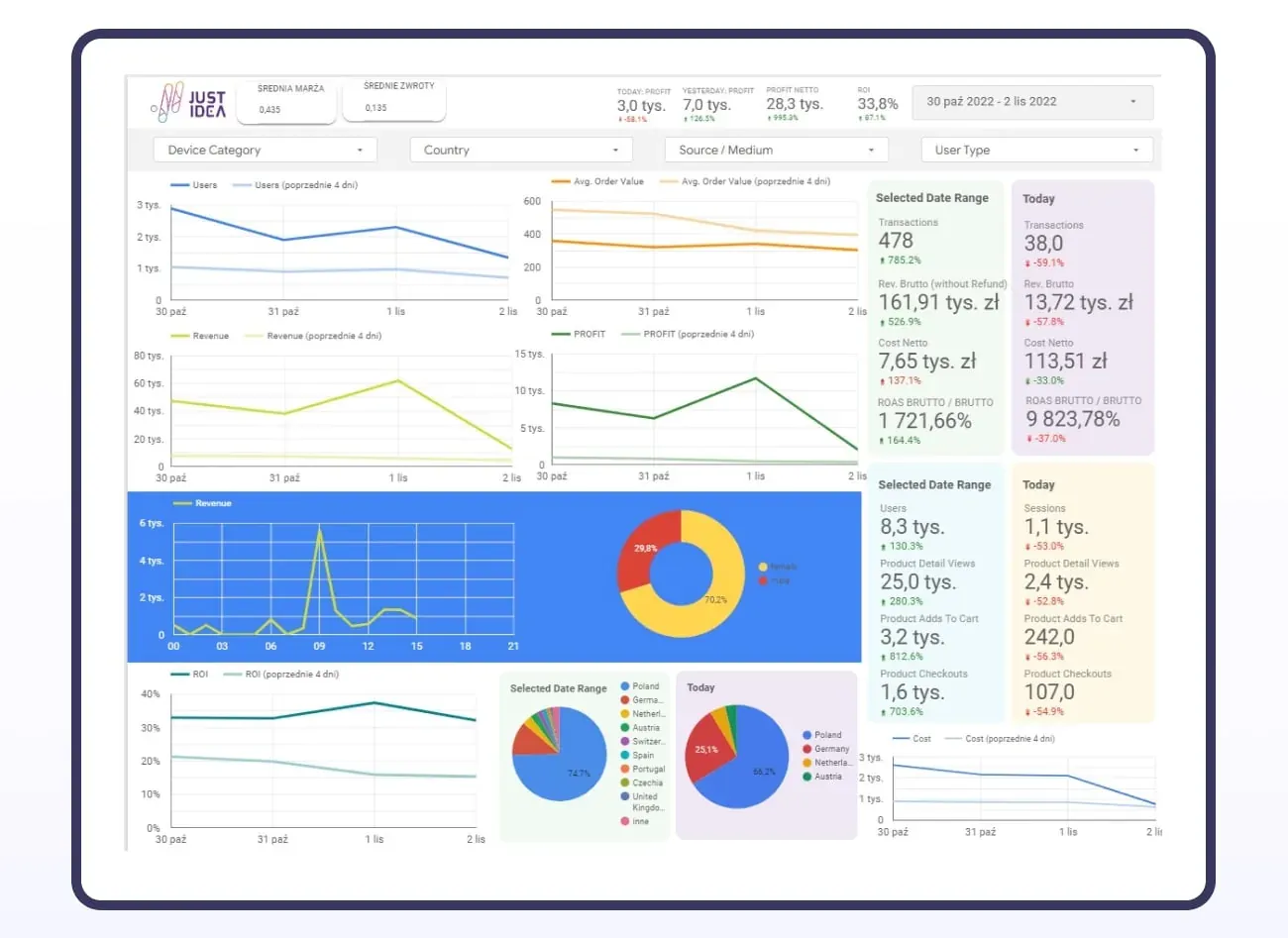
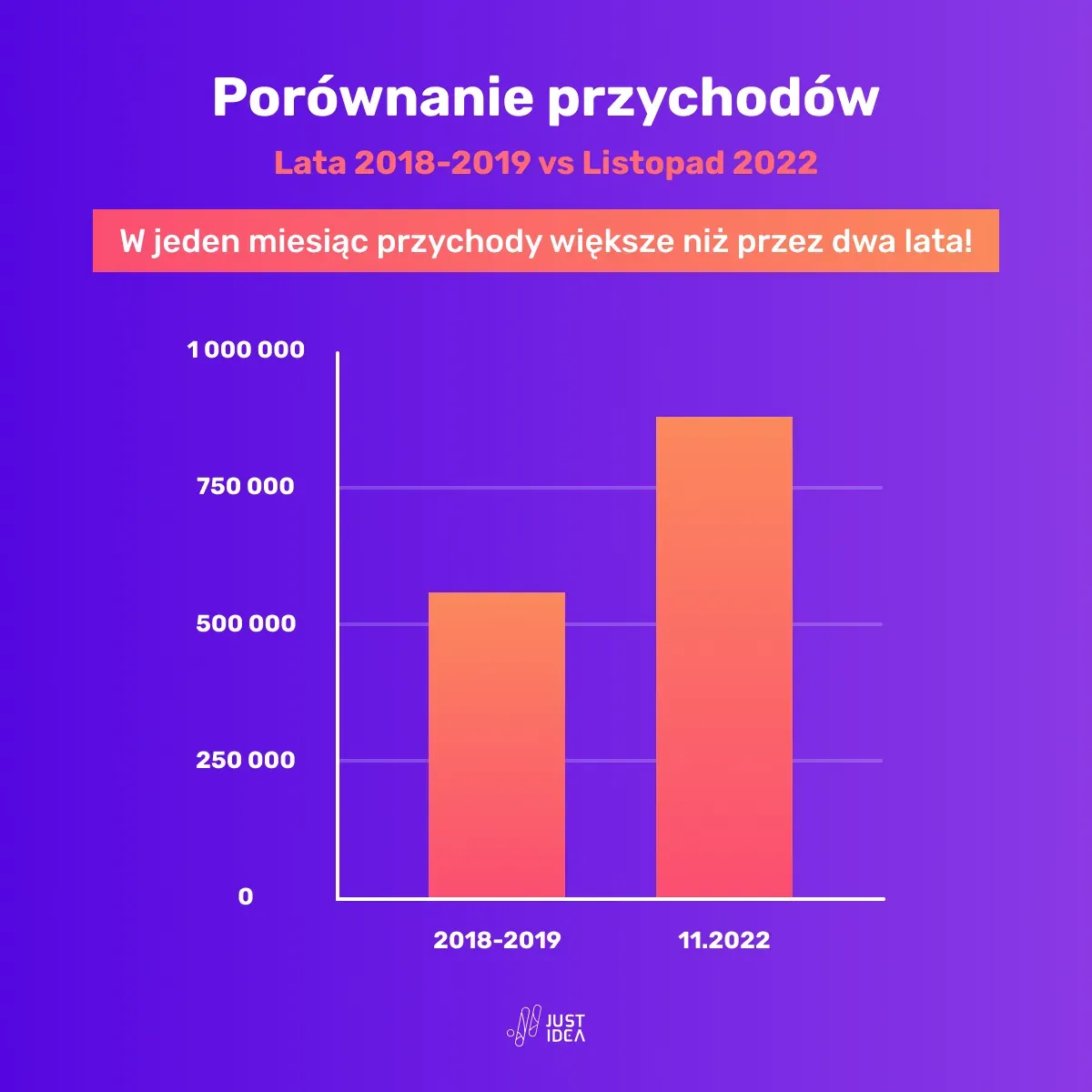
During the first days of the promotion, average daily turnover was around €9,000, more than the annual turnover in the shop's first year of business. It's worth mentioning that the combined turnover from 2018 and 2019 was lower than that of November 2022.
The country where we run our sales activities is one where salaries are usually paid around the 10th of the month, so extending the promotion or launching a new one probably wouldn't bring the expected results. That's why, once the campaign ended, we went back to regular shop prices for the following week. During that time, we could prepare the next part of the promotion.
STAGE II: WARM-UP
After analysing sales across the whole year, we picked the best-selling product groups, split them into 3 parts, and changed the promoted assortment over the course of 10 days. On one day the promotion covered hats and hoodies, on another dresses and jackets. You could call this preparing customers for the main Black Weekend promotion.
One of the goals was to create a habit of checking the brand's communication channels, since recipients didn't know when the next promotion would appear or which products they'd be able to buy at a lower price. The strategy also factored in keeping up the pace and fleeting nature of the promotions, so customers couldn't get too used to discounts in the shop.
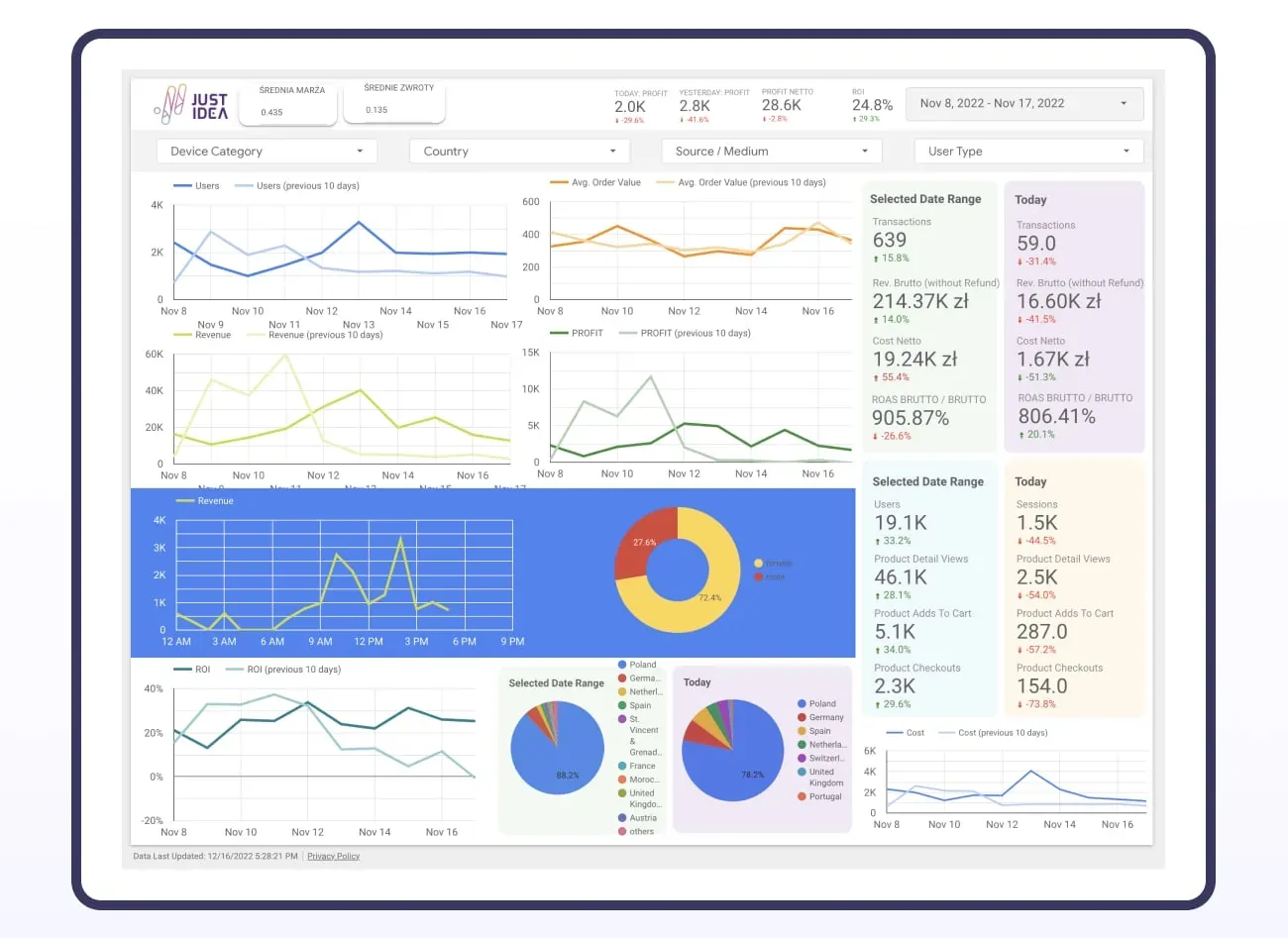
The set of promotions listed above generated over €48,000 in turnover in 10 days, which translated to €6,500 in profit, while keeping ROI at 24.8%.
STAGE III: EXCLUSIVE ACCESS
The next stage of the November activities was early, exclusive access to the promotion. What made the offer exclusive was the fact that only logged-in users could take advantage of it. We assumed that, in the first days of this campaign, we wanted to reach the brand's regular customers.
There were 2 reasons:
- ethical: recognising regular customers by letting them be first to use the promotion in their favourite shop, especially since stock was limited!
- economic: customers have a limited monthly budget, so we launched the promotional campaign ahead of the competition, since this increased the chances they'd spend their money in our partner's shop.
In later steps, we indirectly encouraged new users to create an account in the shop. During this campaign, the number of users with an account grew by 12%.
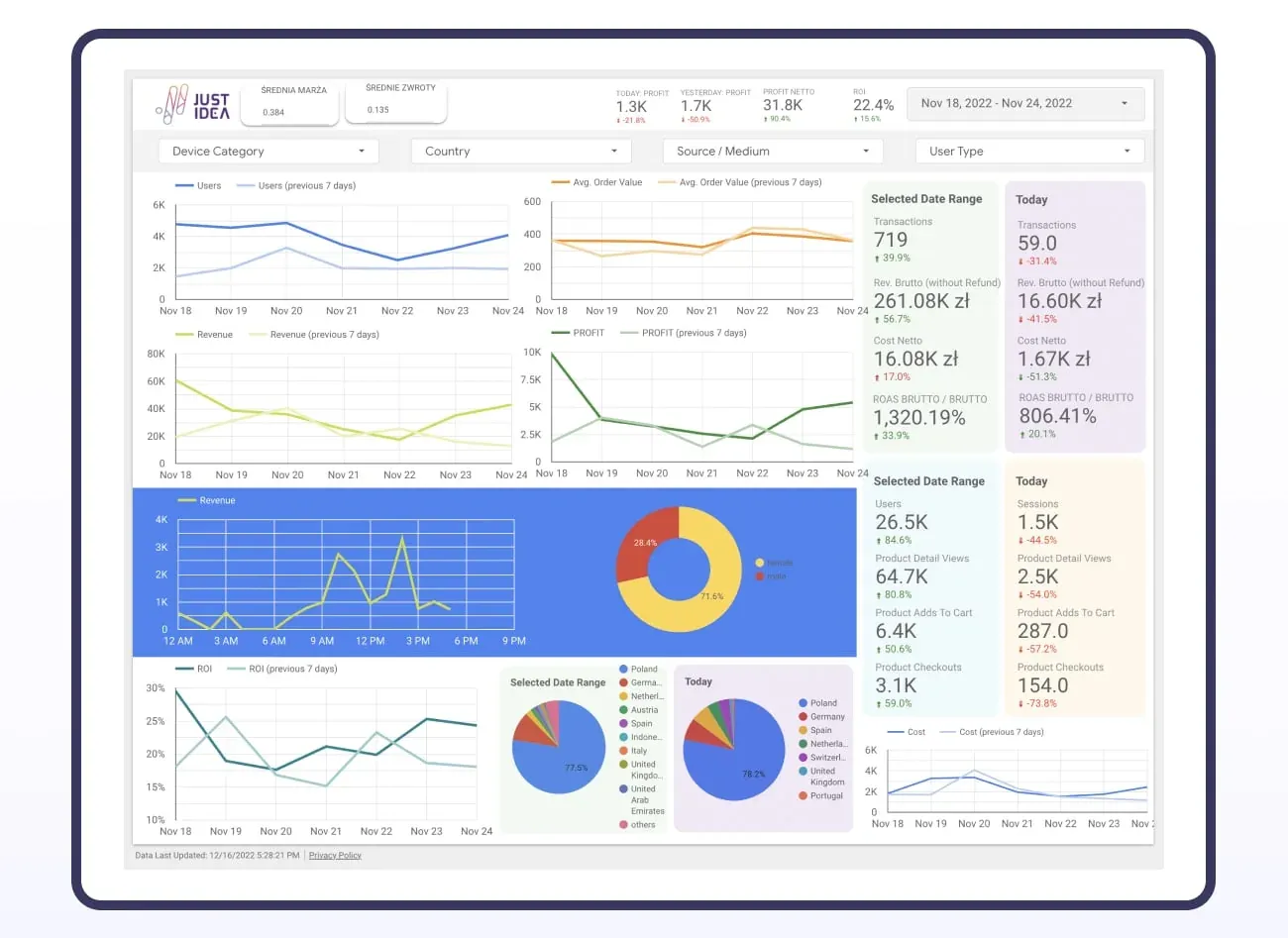
Taking into account margin, advertising costs and the average return rate, the profit came to €7,100 over the week. This was driven by the shop's total 7-day turnover of about €60,000.
STAGE IV: BLACK WEEKEND
On Friday, we launched our Black Weekend activities with broad communication about the promotion.
The campaign ran for 3 days and offered discounts of up to -70%. During this time, customers bought products with a total value exceeding €36,000. The average margin over this period was 38.4%.
After deducting costs, the shop's profit came to around €3,700.
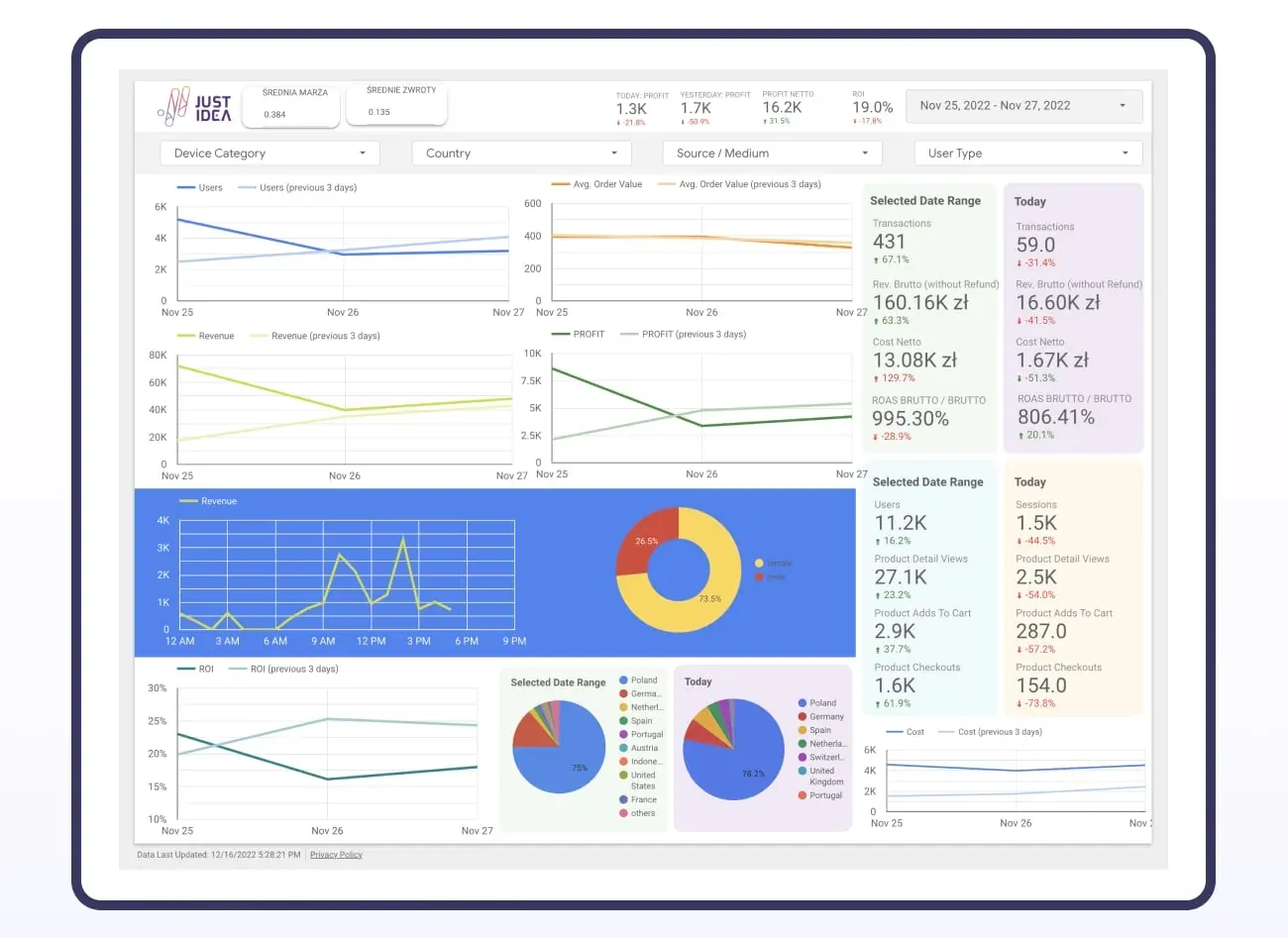
Daily advertising spend was much higher than on previous days, which didn't translate strongly into higher profit. This was most likely due to higher CPC rates that come with the biggest event in e-commerce, Black Friday. That's exactly why we started our advertising activities at the beginning of November, to gradually build up sales growth over the whole month. We're closing Black Weekend with a profit of almost €3,700 and over €36,000 in turnover, but this isn't the end yet…
Let’s squeeze that lemon!

STAGE V: SQUEEZING THE LEMON
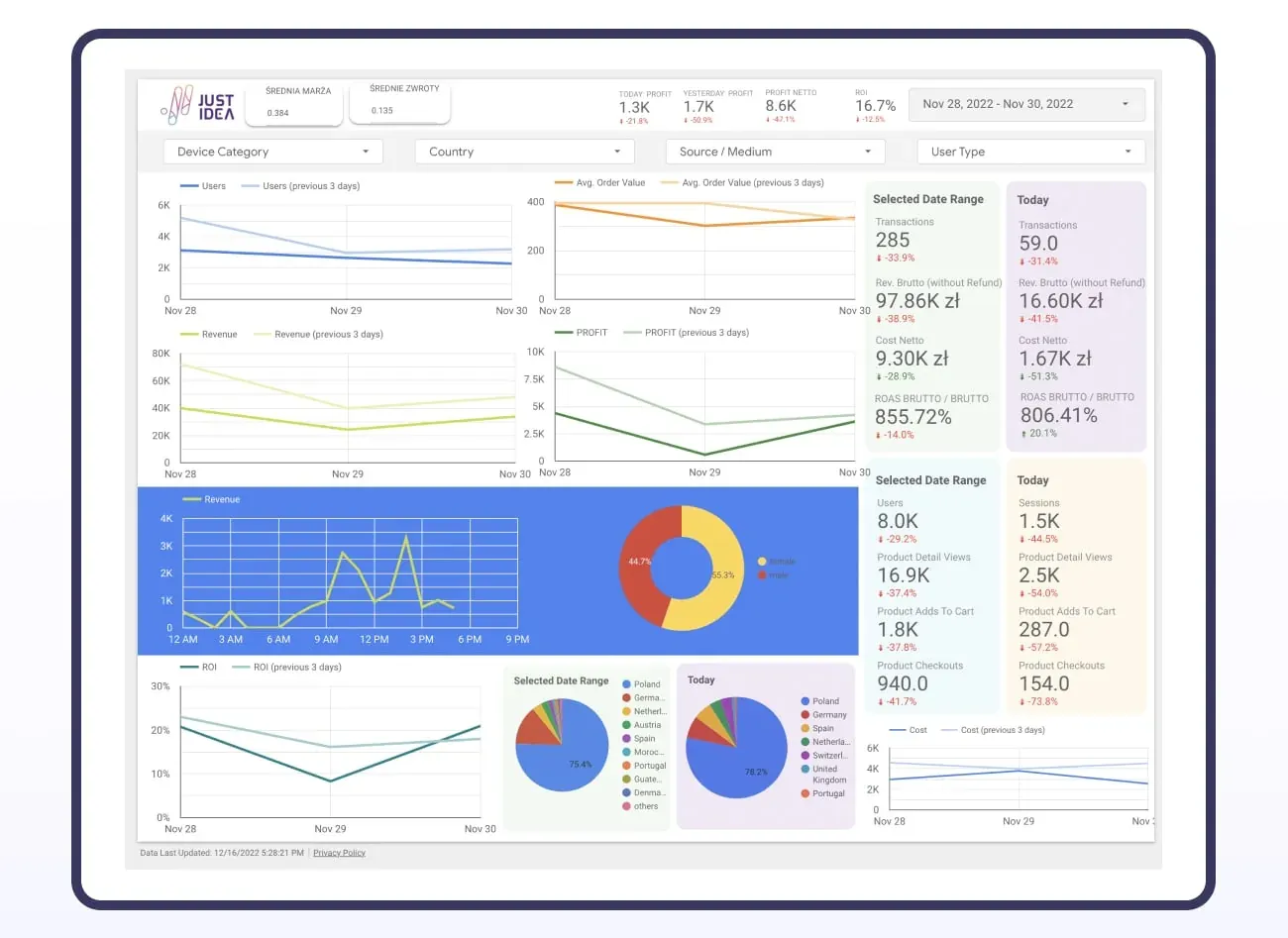
The final stage was our take on Cyber Monday: a promotion for those who hadn't managed to take advantage of the earlier deals. We kept the weekend promotion's level, meaning price cuts of up to -70%. The 3-day turnover came to around €23,000.
The income generated in the last 2 days of the promotion was enough to cover the agency's entire monthly costs.
Summary of the promotional campaigns
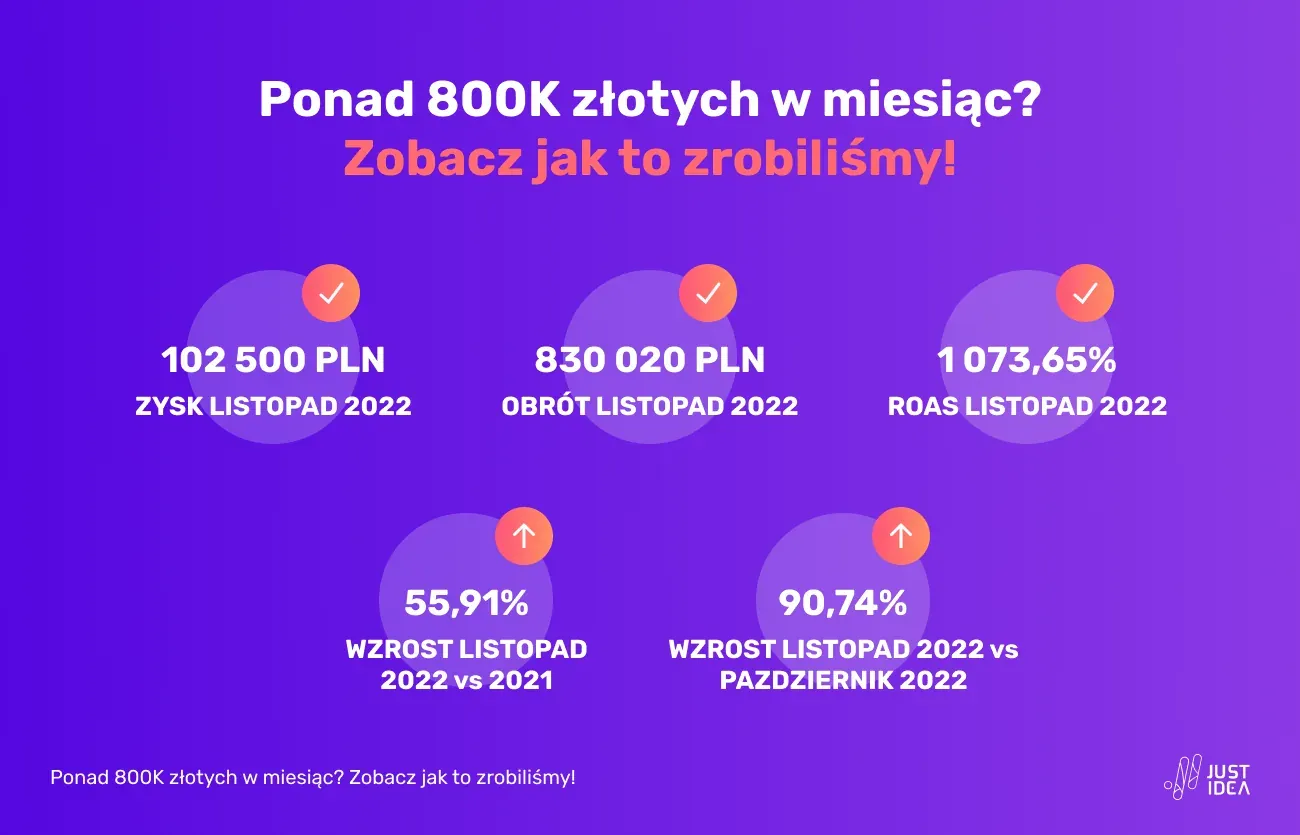
The promotional activities for this brand brought in €189,700 in turnover, which translated into €23,400 in profit. The percentage ROAS over this period was 958.64%. Turnover from this year's November campaigns came out 55.91% better compared to the previous year, though it's worth noting that our forecasts weren't met. Still, given the current economic and geopolitical situation in the world (an ongoing recession and war in Eastern Europe), we're happy with the results we achieved.
Using the dashboards we'd prepared earlier, we could adjust parameters like margin level or average return rate on an ongoing basis. Advertising costs and shop revenue are reported in real time, so every time we look at the table, we know whether our partner is making money and how much. This also helped in estimating the advertising budget: as it rises, profit falls, so keeping the right balance was essential to generating profits.
Want to increase sales in your shop? Find out more!

Have a question about this article? Write to us.