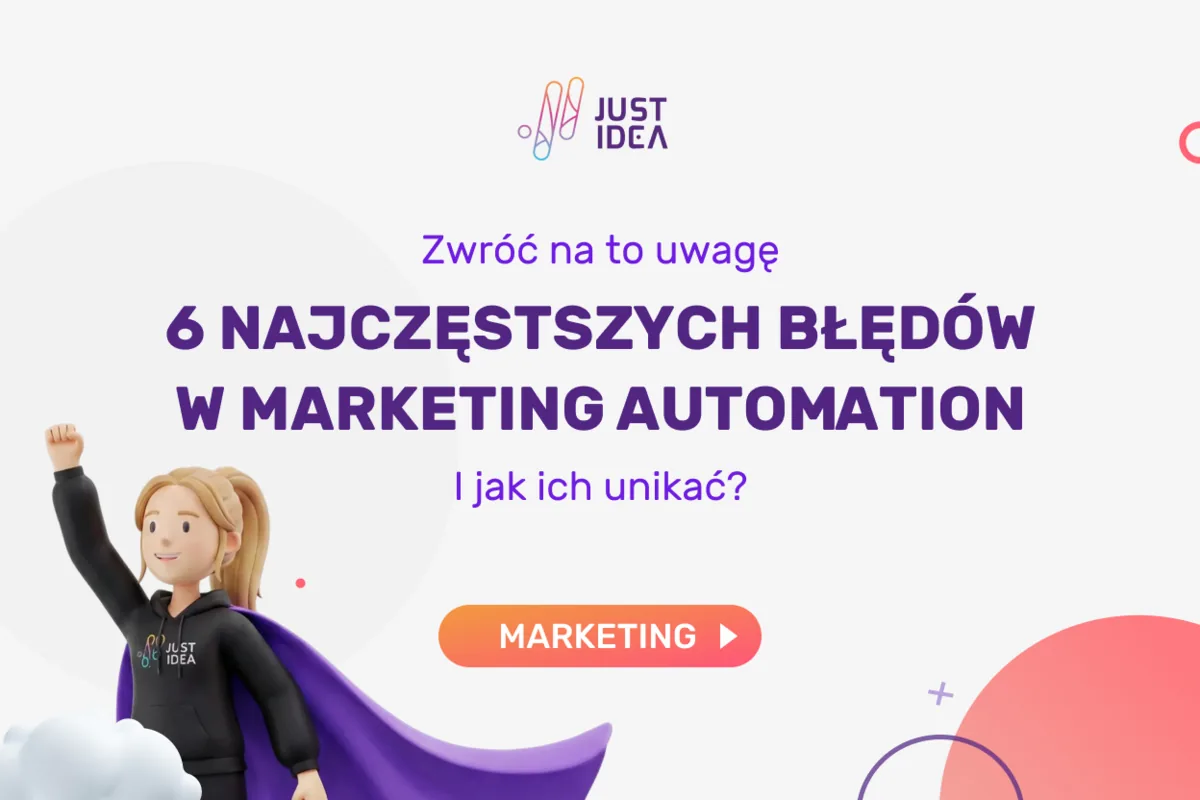











Marketing automation can increase sales, improve retention and save your marketing team's time. But only if it's implemented and run the right way. Many companies make the same mistakes, and instead of spectacular results they end up with frustrated customers and falling conversion rates.
Discover the 6 most common marketing automation mistakes and learn how to avoid them, so your campaigns actually deliver results.
1. Sending Too Many Messages
Automation gives you enormous power, but it's easy to overdo it. If a customer gets several messages a day, they'll quickly write them off as spam.
How to avoid this:
- set sending limits (e.g. a maximum of 2 to 3 messages a week),
- match the frequency to the customer journey (e.g. an abandoned cart needs a quick reminder, but a win-back campaign can be spread out over time),
- monitor unsubscribe rates and recipient reactions.
2. No Audience Segmentation
One message to your whole database? That's a sure way to low engagement. Customers expect personalised communication, and they're right to.
How to avoid this:
- segment your database by behaviour (e.g. last purchase, categories browsed),
- use demographic data, interests and transaction history,
- create campaigns for specific groups, e.g. new customers, loyal customers, or people with a high cart value.
3. No Personalisation
"Dear Customer" and generic content? That doesn't work any more. Personalisation is more than inserting a first name: it means tailoring the whole message to the customer's situation.
How to avoid this:
- use dynamic content (e.g. product recommendations based on purchase history),
- match the send time to user activity,
- show that you understand their needs, e.g. "Your favourite products are back in stock."
4. Wrong Sequencing and Timing
Even the best scenario loses its point if the messages arrive at the wrong time. For example: an abandoned cart reminder sent 2 weeks later, or a welcome message that reaches the customer a day after they signed up.
How to avoid this:
- map the customer journey in detail,
- test different time intervals (1h vs 24h),
- analyse the data to find the best moment to reach out.
5. Focusing Only on Sales
Automation isn't just "buy now". If all your communication comes down to an aggressive call to action, customers get put off and lose trust.
How to avoid this:
- weave educational, inspiring content that builds brand awareness into your automations (e.g. guides, case studies, customer stories),
- show your brand's values: in a highly competitive market, customers want to identify with the brand, not just the product,
- build the relationship step by step: from education, through inspiration, to the offer.
6. No Analysis or Optimisation
Automation isn't a one-off project. If you don't analyse the results and make changes, your campaigns will quickly stop working.
How to avoid this:
- monitor KPIs: open rate, click-through rate, conversion rate, customer value,
- run A/B tests on content, visuals and timing,
- make regular optimisations instead of running on autopilot.
Summary
Marketing automation is a powerful tool, but its effectiveness depends on whether you can avoid the typical mistakes: from too many messages, through a lack of segmentation, to ignoring the data.
Remember, technology doesn't sell: how you use it does. If you take care of personalisation, timing, added value and continuous improvement, automation will become your best ally in increasing sales and building lasting customer relationships.
Want to find out whether your marketing automation scenarios are working properly? Get in touch with JustIdea: we'll analyse your activities and show you where the biggest growth opportunities are hiding.
Also Check Out:

Have a question about this article? Write to us.