













I've been working in e-commerce and performance marketing for over 10 years. Day to day, I run JustIdea agency, where we help scale online shops, effectively and profitably. But I don't just advise: I'm also a practitioner. I run several of my own online shops, including the Surf Inc. brand, which grew 4x in just 5 months. Today I'll show you why that happened and what was key: not ROAS, but Profit.
Let's Start With a Simple Question: How Much Did You Earn Today?
I'm not asking about turnover from Google Analytics. I'm asking: how much money has actually stayed in your account? Today I'll introduce you to "profit-first" thinking: based not on marketing metrics, but on real profit. Because if you don't know how much you're earning, how do you expect to scale effectively?
What Is Profit?
Profit is second-degree margin: revenue minus:
- returns,
- ad costs,
- COGS (cost of goods sold),
- packaging and shipping costs,
- payment processing fees,
- influencer costs,
- fulfilment,
- and other correlated costs.
What's left at the end is real profit.
Unfortunately, most shops find out about it too late, usually from their accountant, on the 20th of the following month. In the meantime, performance marketing agencies operate on data that says nothing about the profitability of their activities.

Why Has ROAS Stopped Being Enough?
ROAS is the ratio of campaign revenue to ad spend. It helps you compare campaigns on a micro scale, but it's an incomplete metric. If you have a wide product range with different production costs, returns and payment methods, ROAS can be misleading. A product with a high ROAS can end up making a loss.
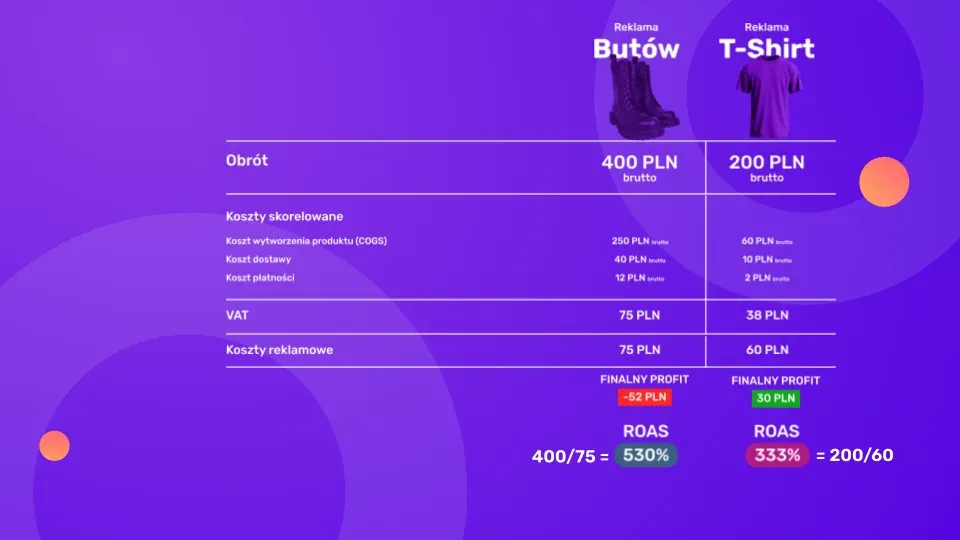
Let's say we sell two products: heavy combat-style boots and a simple T-shirt. Both can have similar ROAS figures, because they both generate sales, but their real profitability is completely different. Why? Correlated costs.
- The boots have a high production cost, high shipping cost (they're heavy and go abroad), and the payment was in instalments: in total, high costs.
- The T-shirt is cheap to produce, low delivery cost, paid by card: minimal costs.
Even though the boots had a higher ROAS than the T-shirt, once all the costs were deducted, they turned out to make a loss of €12, while the T-shirt generated a profit of €7. This proves that ROAS can be an illusion if you don't analyse the whole cost structure.
POAS: ROAS's Smarter Sibling
This is where POAS (Profit on Ad Spend) comes in: the ratio of net profit to ad spend.
POAS < 100%: you're losing money, POAS > 100%: you're making money.
Simple. Practical. Effective. It's harder to measure at the micro level, but on a macro scale it's perfect for analysing campaign effectiveness.

A Problem With the Data? Welcome to the World of Modelling
Since iOS 14, GDPR regulations and browsers blocking cookies, Facebook and Google model data. They attribute conversions to campaigns that didn't necessarily influence them. The result? Inflated ROAS figures, double-counted conversions, and inconsistent data between the ad platforms and reality.
MER: Common Sense in Numbers
MER (Marketing Efficiency Ratio) = total revenue / ad spend. One metric, one truth. Regardless of platforms and attribution errors.
Google Analytics? Not Quite
GA4 doesn't let you:
- view profits,
- factor in COGS,
- analyse real profit.
Facebook makes measuring traffic even harder (in-app browser). Multi-device? Modelled data again. GDPR? No consent given equals no data.
Excel Isn't Enough
Manual calculations in Excel? One day's delay and the data is already out of date.
Profit Analytics: A New Era for E-commerce
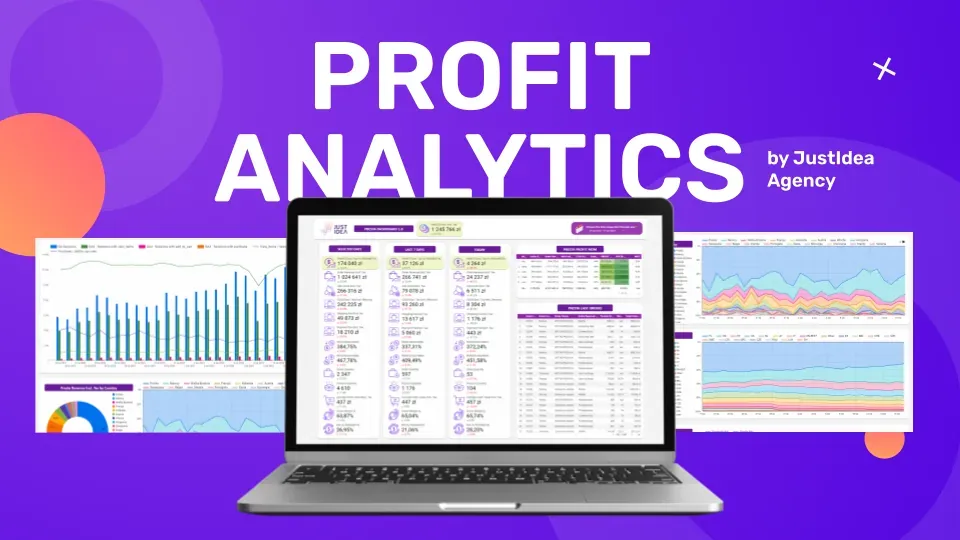
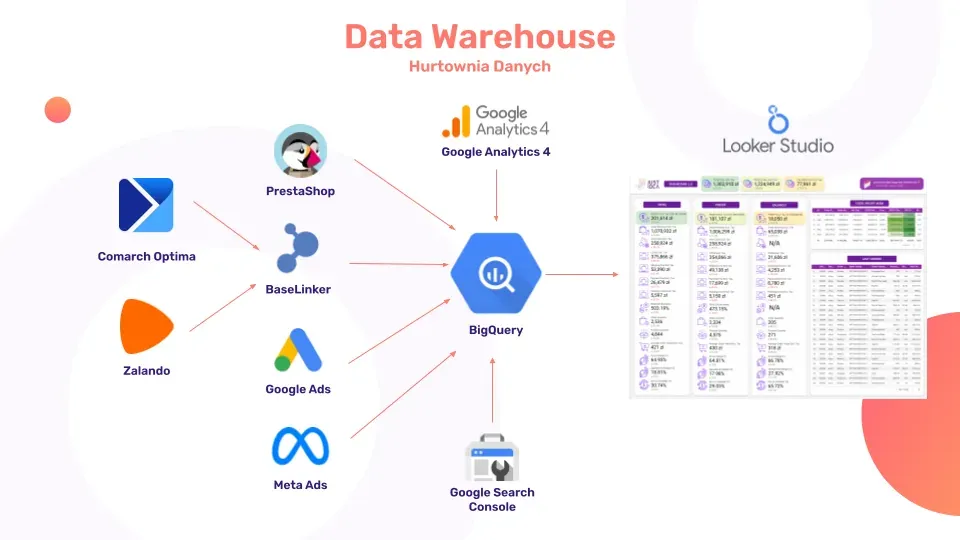
The solution is a data warehouse. Specifically: Profit Analytics, a system we're building at JustIdea. We collect data from:
- the shop (e.g. PrestaShop),
- ERP (e.g. Comarch Optima),
- marketplaces (Zalando),
- BaseLinker,
- Google Ads, Facebook Ads, GA, GSC.
We merge it all in BigQuery and present it in Looker Studio. Everything in real time
Example Dashboards:
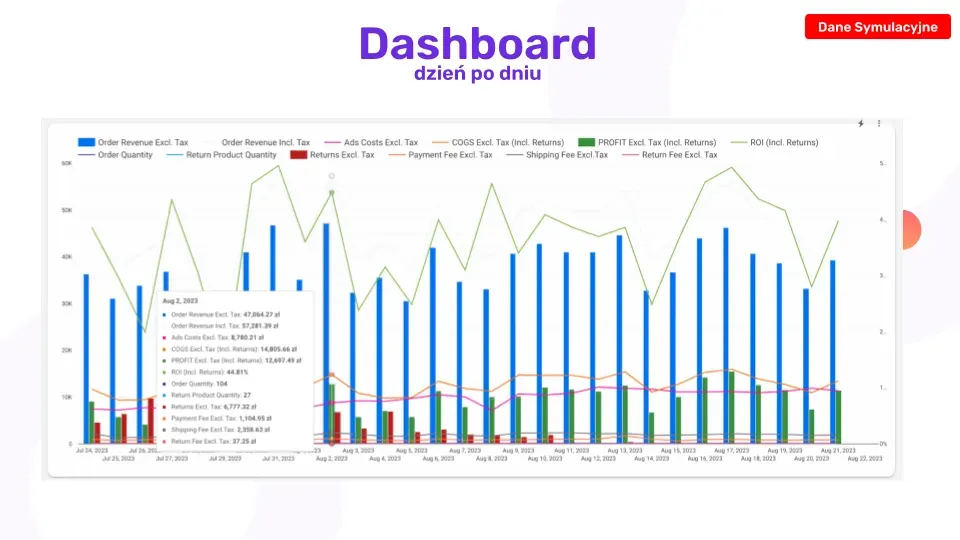
Daily Profit: Profit, Revenue and Returns Day by Day.
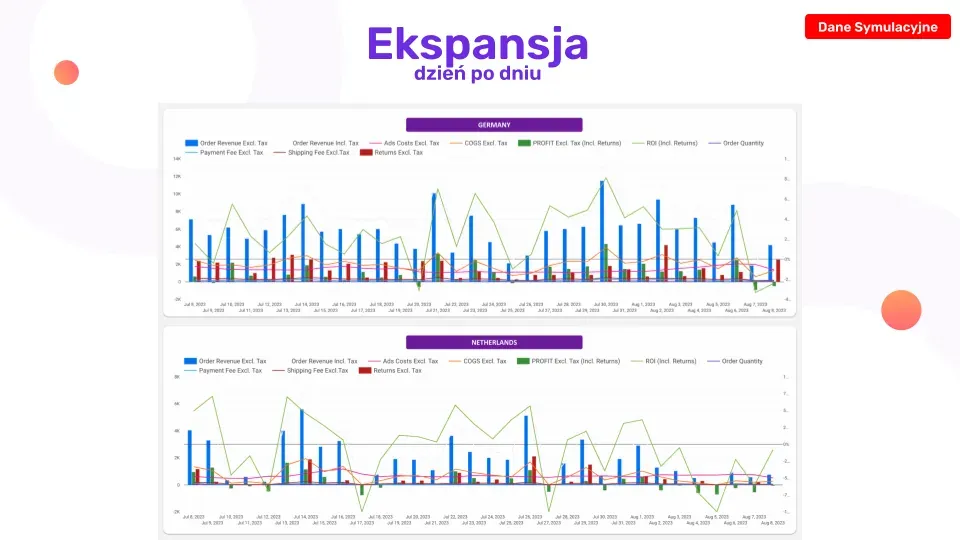
International Expansion: Profit and Efficiency by Country.
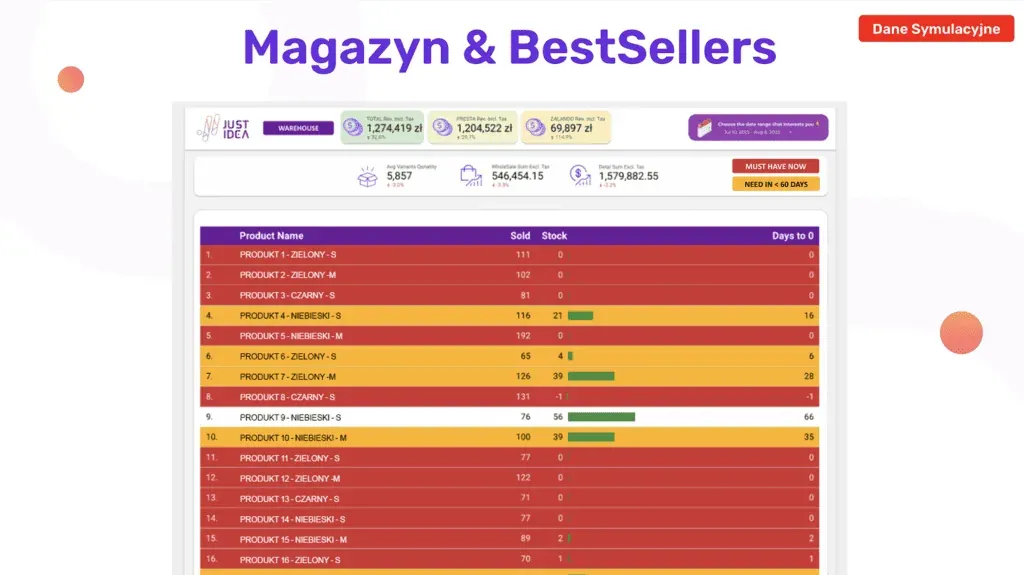
Stock Levels: Value of Goods in Stock vs. Sales.
Bestsellers: Sorted Not by Units Sold, but by Profit.
The November Paradox: When "Accounting" Gets Reality Wrong
November: €230k in turnover, with €115k in returns in December.
December: €45k in sales, with €70k in returns from November.
On the books: December is in the red. In reality: November was the weaker month.
We know this from experience: at Surf Inc. we deal with it every year. On Black Friday we make huge sales, but we know some of it will come back. If we analysed the data on an accounting basis, we'd draw the wrong conclusions.
The solution? Attribute returns to the day of purchase, not the day the return is processed.
Key Takeaways
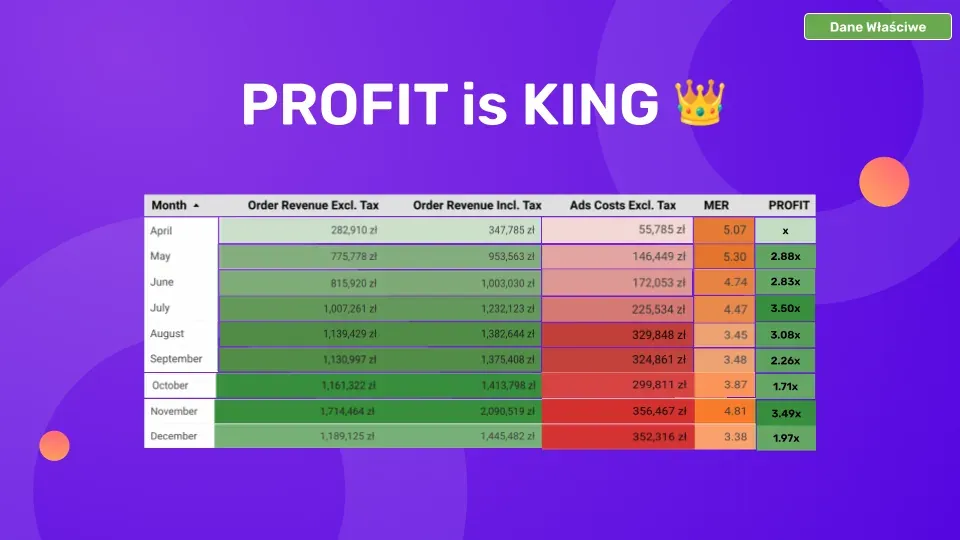
- ROAS is a myth.
- POAS is the new reality.
- Profit is the true currency of e-commerce.
- MER gives you the macro picture.
- A data warehouse is a necessity.
To Finish
If you want to scale your e-commerce business effectively, stop living the illusion of advertising metrics.
Start analysing real profit. Profit doesn't lie. And that's exactly what gives you the edge that lets you win in the market. Building our own products and brands across different e-commerce segments, we've repeatedly seen how much data can change our original assumptions about sales potential. Data doesn't just correct us: it also helps us understand our customers better. And that's the key to growth.
Want to Implement Profit Analytics in Your Shop?
Get in touch with us at JustIdea: we'll build you a system that shows the truth, not an illusion.

Also Check Out:

Have a question about this article? Write to us.