













Language models are becoming the foundation for innovative solutions in business in 2025. Automation, data analysis and content generation are just some of the applications that are growing in popularity. Choosing the right AI model isn't a simple task, since the market now offers many solutions that differ in features, speed and scalability. Choosing a model is one decision, and fitting it into real sales and communication processes is another, one where a marketing agency usually helps.
Discover the 5 best language models in 2025
In 2025, choosing the right model can have a decisive impact on the efficiency of the organisation that adopts it. These models differ in their range of applications, cost, speed, available features and, most importantly, the context in which they're used. That's why it's so important to have an up-to-date ranking that takes all of these aspects into account.
A ranking of language models helps you better understand which model best fits specific needs. For example, for customer service companies, response speed can be key, while for research or consulting organisations, the ability to perform deep analysis and multi-step reasoning matters more. Also, with the growing number of open-source models, which offer more flexibility but require extra configuration, choosing the right model has strategic importance.
1. ChatGPT (GPT-5): a versatile leader for demanding tasks
ChatGPT in its GPT-5 version, developed by OpenAI, is one of the most recognisable language models on the market. Its versatility and advanced capabilities have earned it wide recognition among individual users as well as companies that use its features across various areas, such as content generation, process automation or translation. This model is used for many purposes, from simple everyday tasks to complex operations that require deep understanding of context.
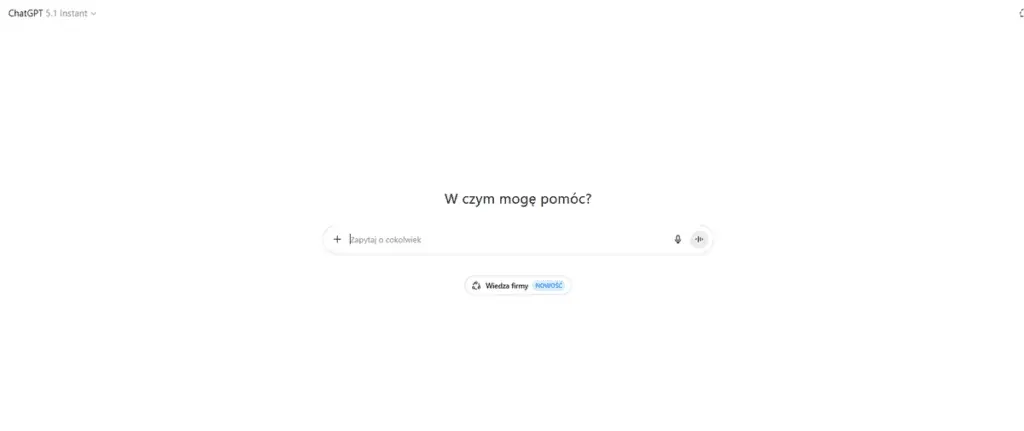
Why ChatGPT is so widely used, in business and privately
One of ChatGPT's main strengths is its versatility. This model handles a wide range of applications well, including generating content for marketing, answering customer queries, and even programming and translation. Thanks to its flexibility, ChatGPT successfully supports both small businesses and large organisations across various industries, adapting to users' needs.
Another important aspect that sets ChatGPT apart is its multimodality. The model handles not only text, but also images, audio and video, which allows it to be used in more advanced applications. These capabilities make ChatGPT a particularly valuable tool for companies that need more complex solutions, integrating various types of data and media in their automation processes.
ChatGPT and integration with OpenAI
In addition, ChatGPT integrates seamlessly with the OpenAI ecosystem, making it easy for companies to adopt tools such as the API and other OpenAI services. This feature makes the model an ideal solution for automating business processes, making it easier to manage information and improve efficiency across various areas of a business. Thanks to its extensive ecosystem, users can easily combine ChatGPT's potential with other tools, greatly simplifying day-to-day operations.
2. Claude 3.5 Sonnet: a master of ethics and analysis
Claude 3.5 Sonnet, developed by Anthropic, is one of the newest language models and is gaining recognition on the market thanks to its exceptional skills in analysing complex data and generating precise content. This model stands out from the competition not only for its advanced features, but also for its high ethical standards, which makes it particularly recommended for industries where data security and privacy are a priority.
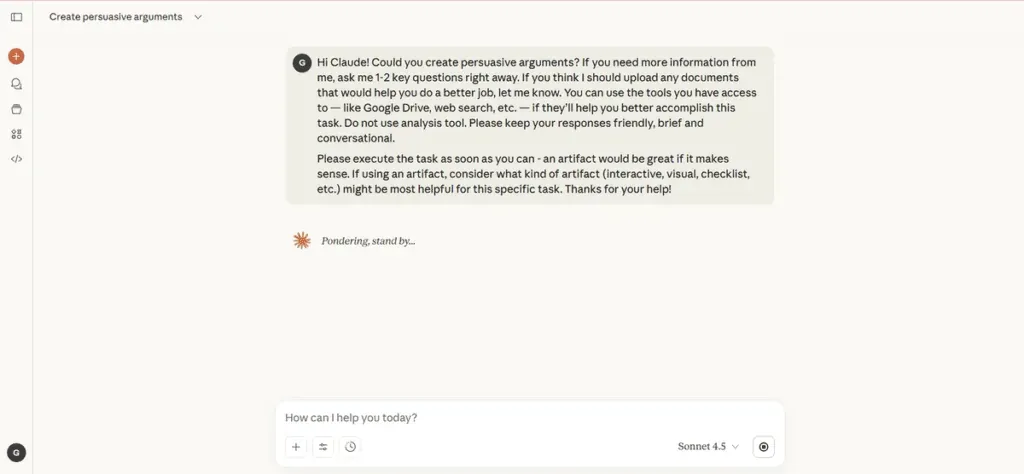
What benefits does Claude 3.5 Sonnet offer?
Claude 3.5 Sonnet provides a high level of security and privacy protection, which makes it suitable for working with confidential data, such as personal or financial information. Its compliance with regulations such as GDPR, along with its data-protection mechanisms, gives companies confidence that their information is safe.
What's more, Claude 3.5 Sonnet stands out for its multi-step reasoning abilities, which allow it to solve complex problems that require deep analysis. Thanks to this feature, the model is especially valuable for companies that need to make decisions based on complicated, multi-step analyses.
3. Gemini 2.5 Pro: the king of multimodality
Gemini 2.5 Pro, developed by Google, is one of the most powerful language models, standing out for its exceptional ability to work with many types of data. Thanks to support for text, images, audio and video, this model is an ideal tool for analysing diverse data, and for use in fields such as marketing, education or scientific research. Its versatility allows integration with different types of media, making it extremely valuable for companies that need solutions suited to today's challenges around multimodal data.
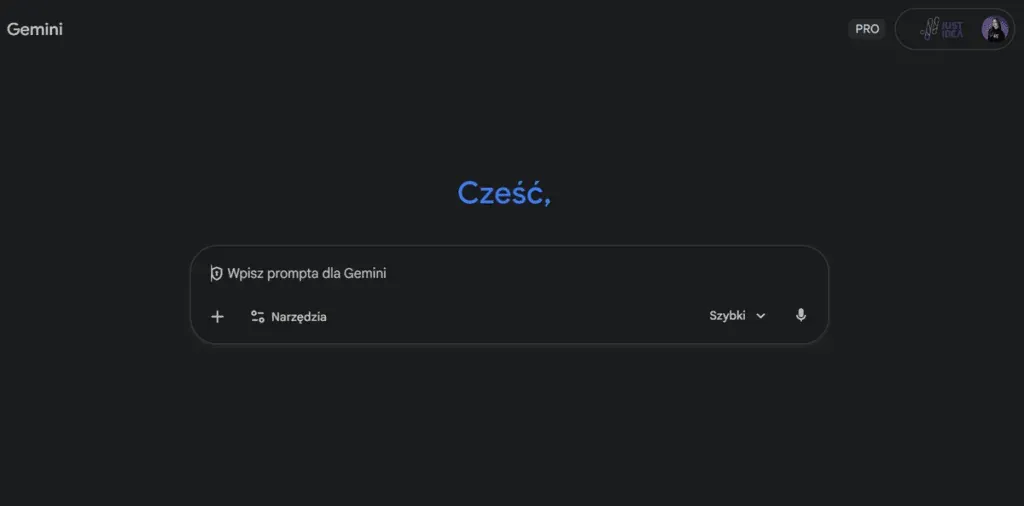
Why is Gemini 2.5 Pro worth trying?
Gemini 2.5 Pro offers advanced multimodality, meaning it can process and analyse not just text, but also images, audio and video. Thanks to this ability, the model can turn diverse data into coherent content, which is invaluable in industries that need to analyse many types of information at once. For example, Gemini 2.5 Pro can analyse text accompanying photos, understand video context, or transcribe audio content into text, enabling the creation of more complex applications and processes.
Another major benefit worth mentioning is Gemini's full integration with Google's ecosystem. As a Google product, the model draws on the power of tools such as Google Cloud, Google Search and Google Workspace. This kind of integration makes it easier to adopt the solution in companies that already use Google products. As a result, Gemini 2.5 Pro enables process automation, faster data processing and better synchronisation with existing systems, making it simpler and more effective to roll out in an organisation.
Read more about Gemini in our article: Gemini AI: a complete guide to the tool and its features
4. Grok 3: fast, real-time responses
Grok 3, developed by xAI, is a model that stands out mainly for its ability to process data quickly in real time. Thanks to this exceptional feature, Grok 3 finds broad application in industries that need lightning-fast responses to queries and data processing. This model is especially valuable in systems that must run live and deliver answers almost instantly, such as chatbots, customer service systems or applications based on real-time interaction.
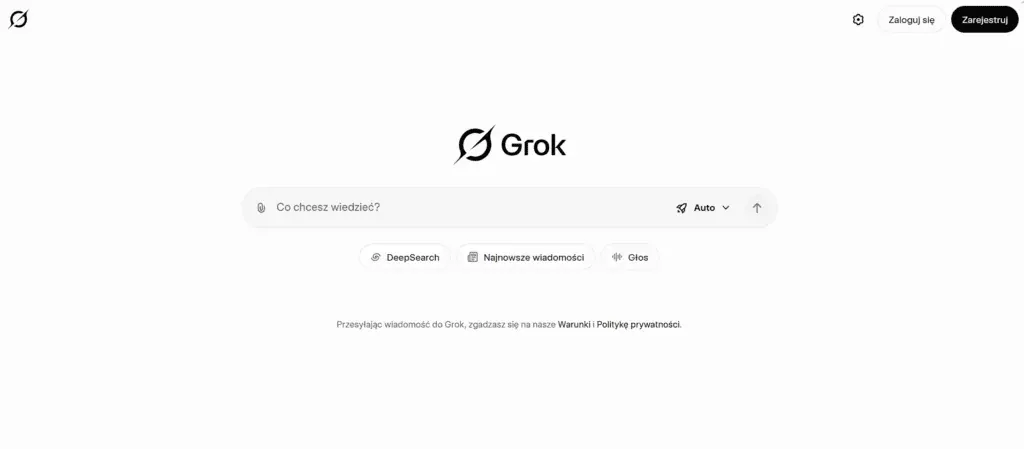
What sets Grok 3 apart from other language models?
Grok 3 is designed for a lightning-fast response to queries, making it an ideal solution for systems that require an immediate answer, such as chatbots or e-commerce platforms, where response time is key to customer satisfaction. Thanks to its exceptional processing speed, Grok 3 can handle thousands of interactions in a short time, ensuring smooth, continuous conversations with users. In situations where response time is critical, this model performs excellently, eliminating delays and ensuring smooth customer service.
It's also worth noting that Grok 3's speed isn't limited to answering queries. The model is also optimised for processing large amounts of data quickly, which makes it an ideal solution for applications that require high availability. Grok 3 can handle queries, analyse data in real time and deliver results at an almost instant pace, making it a great fit for dynamic environments such as financial markets, data analysis or social media monitoring.
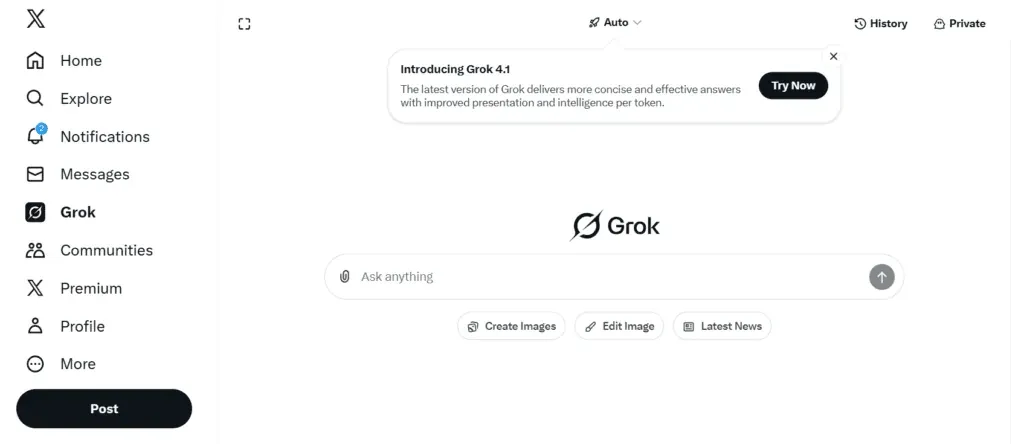
What's more, Grok 3 is available on the X platform (formerly Twitter), which allows easy integration with systems built on that platform. Thanks to this integration, the model can process and analyse data generated by users in real time, such as tweets, comments or posts, making it a powerful tool for monitoring public opinion or managing a brand's online reputation.
5. Claude 4 Opus: a master of reasoning and long-term analysis
Claude 4 Opus, developed by Anthropic, is one of the most advanced language models on the market. Thanks to its unique abilities in multi-step reasoning and long-term analysis, Claude 4 Opus is gaining popularity among companies working on complex projects that require deep analysis and continuous data processing. It's a model that performs excellently in cases where logical reasoning and attention to detail are of key importance.
Key capabilities of Claude 4 Opus you should know
Claude 4 Opus stands out above all for its multi-step reasoning ability. The model doesn't just analyse data, it can also carry out complex reasoning processes that require logical thinking and analysis on multiple levels. This makes Claude 4 Opus an ideal tool for tasks that require decisions based on many variables or long-term analysis of results. For companies dealing with difficult analytical problems, such as strategic, financial or technology consulting, Claude 4 Opus provides irreplaceable support.
Thanks to its advanced context window of 200,000 tokens, Claude 4 Opus can process very large amounts of data, making it an ideal solution for projects that require analysis of lengthy documents, such as contracts, research reports or academic papers. It's also worth noting that the ability to extend the context window to 64,000 tokens within the model's thinking process allows for even deeper analysis, enabling it to process more complicated information when solving complex problems.
Key comparison of large language models
| Model | Main benefit | Can you have a conversation with it? | Distinguishing feature |
|---|---|---|---|
| ChatGPT (GPT-5) | Versatility: suited to content generation, translation, customer service, programming. | Yes | Huge token context, versatility in content generation, integration with the OpenAI ecosystem |
| Claude 3.5 Sonnet | Excellence in data analysis and high security standards, suited to processing sensitive data | Yes | Advanced multi-step reasoning, high ethical standards, ideal for working with confidential data |
| Gemini 2.5 Pro | Multimodality: supports text, images, audio and video, ideal for working with different types of data | Yes | Integration with the Google ecosystem, multimodal processing, versatility in data analysis |
| Grok 3 | Real-time response speed: ideal for live interaction, such as chatbots and e-commerce platforms | Yes | Extreme response speed, real-time data processing, ideal for dynamic environments |
| Claude 4 Opus | Advanced reasoning and long-term analysis, ideal for complex projects requiring deep analysis | Yes | Multi-step reasoning ability, advanced context window for long-term document analysis |
| Mistral | Open-source, ideal for developers: great for coding tasks and integration in complex applications | Yes | Open-source model, ideal for programming, easy integration into development applications |
Other language models worth knowing
As large language model (LLM) technology develops rapidly, niche solutions are gaining more and more importance, offering unique features even though they don't always achieve the popularity of the biggest brands. It's worth knowing a few of them, such as DeepSeek R1, Qwen 3 (4B) or Gemma 3 (4B), since they can provide specific advantages in applications where flexibility, cost or openness matter.
DeepSeek R1
DeepSeek R1 is an open-source model designed with reasoning and long-context processing in mind. Its advantage lies in flexibility and full control over the model, which makes it an ideal tool for teams that need to adapt a system to their specific needs. Unlike closed models, DeepSeek R1 allows modification of the code and weights, so it can be used in more complex, custom environments. Its architecture is optimised for analysing large datasets and multi-step reasoning, making it a great choice for research and development projects. It can be used in applications that demand high precision, such as strategic analysis or financial consulting.
Qwen 3 (4B)
Qwen 3 (4B) is a model that, despite its smaller size (4 billion parameters), offers a very good price-to-performance ratio. It's characterised by fast response times and relatively low hardware requirements, making it an optimal solution when full computing power isn't needed. It's a great model for applications such as content generation, medium-scale analysis or internal chatbot support. Thanks to its compact build, Qwen 3 (4B) is more economical compared to larger models, while still providing high-quality answers. It can be used both by companies just starting to adopt LLM technology and by those looking for a more cost-effective solution for less complex applications.
Gemma 3 (4B)
Gemma 3 (4B) is a model built with efficiency and low resource use in mind. Its particular strength is low response latency, making it ideal for integration with mobile apps, internal systems or other solutions that require a fast response. Despite its smaller size, Gemma 3 (4B) maintains high-quality content generation, making it a suitable choice for deployments that don't require the full power of the largest LLMs. Its flexible integration allows easy embedding into various applications, which matters in environments that need fast, efficient AI tools. It's a good choice for startups and small to medium-sized businesses that need LLM solutions with reasonable performance and price.
| Model | Type | Advantages | Use case |
|---|---|---|---|
| DeepSeek R1 | Open-source | - Open-source, customisable - Excellent reasoning and large-data processing - Scalable for large projects | Data analysis, research, solving complex problems |
| Qwen 3 (4B) | Closed source | - Fast response time - Optimal price-to-performance ratio - Low hardware requirements | Content generation, medium-scale analysis, chatbots |
| Gemma 3 (4B) | Closed source | - Low response latency - Compact, economical - High-quality answers in fast applications | Mobile applications, fast responses in internal systems |
LLMs in business: how do they make work easier?
AI language models used in business are becoming more and more advanced. Thanks to applications in fields such as marketing, HR and data analysis, they help companies optimise processes, improve customer service quality and generate content that grabs the audience's attention. For example, the best models for writing creative copy, such as GPT-5, can create high-quality articles, product descriptions or ad content. AI applications are therefore becoming a key tool in marketing strategies and internal process management.
Additionally, in HR, AI can significantly ease the recruitment process and human resource management. AI models help with automatic CV screening, analysing skills, experience and how well candidates match role requirements. On top of that, models such as GPT-5 or Claude 4 Opus can generate job adverts that attract the right candidates, and can automatically answer applicants' questions. Thanks to this technology, companies can save time by eliminating manual processes and optimise the entire recruitment process, from application analysis to interviews.
Language model ranking: what's worth remembering?
Choosing the best language model depends on a company's needs. Open-source models, such as DeepSeek R1, offer flexibility and control, while commercial solutions like GPT-5, Claude 4 and Gemini 2.5 Pro dominate in process automation and content generation, thanks to their multimodality and ecosystem integrations. For marketing and creative companies, models such as GPT-5 provide versatility, enabling high-quality content generation and easy integration with existing systems. The choice of model should match specific needs, from customer service to advanced process optimisation.
FAQ section
1. Which language model is best suited for generating marketing content?
For generating marketing content, ChatGPT (GPT-5) is best suited, standing out for its versatility and excellent ability to create text for adverts, blogs, product descriptions and many other marketing materials.
2. Which language model offers the best data security and privacy?
Claude 3.5 Sonnet is especially valued for its advanced privacy protection features and compliance with regulations such as GDPR. It's a model particularly recommended for industries that work with sensitive data.
3. What are the Polish language models?
Polish language models such as Bielik.ai and PLLuM are gaining popularity in 2025. Bielik.ai is an open-source model built for analysing text and generating content in Polish, tailored to local conditions. PLLuM, meanwhile, developed by Polish research institutions, is a language model intended for use in public administration, education and business, promoting Poland's technological sovereignty.
If you want to learn more about AI, check out our other articles: