














DeepSeek and SEO: What You Need to Know
What is DeepSeek?
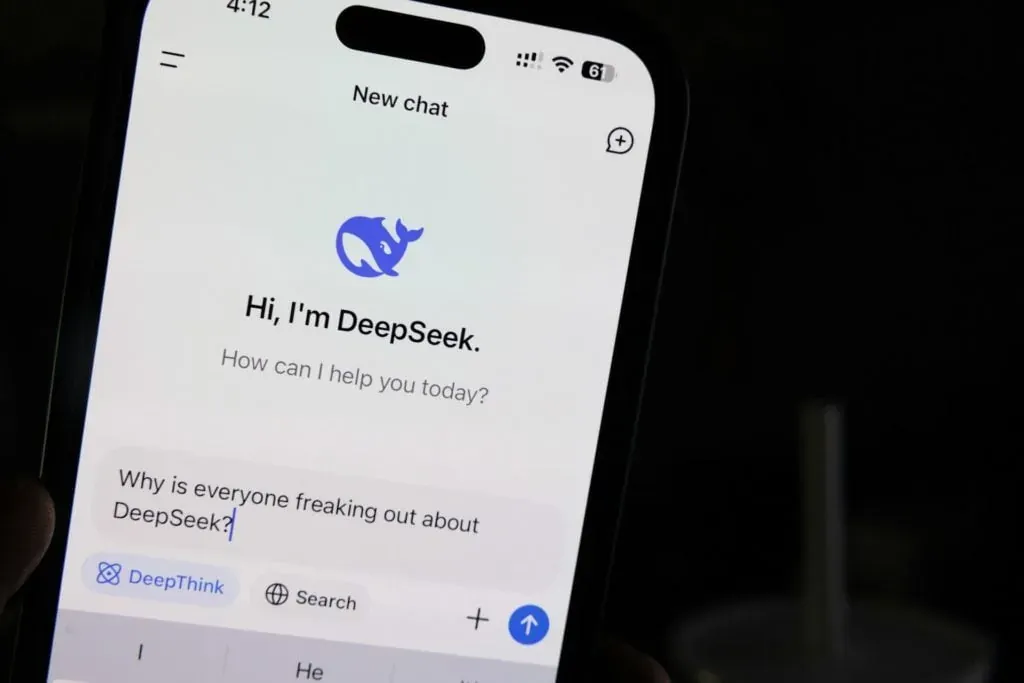
DeepSeek is one of the newest AI language models, gaining popularity thanks to its openness and flexibility. Built by the Chinese company DeepSeek AI, the model competes with giants such as OpenAI's ChatGPT or Google's Gemini. In an SEO context, DeepSeek opens up entirely new possibilities for digital marketing specialists and content creators. Unlike closed systems, DeepSeek offers full source-code transparency. This means it can be deployed locally, customised to individual needs, and integrated with your own infrastructure. That's a significant advantage for companies that want control over their data and don't want to rely solely on external cloud service providers.
The model works on a similar principle to other large language models (LLMs), analysing enormous sets of text data to generate answers, content or suggestions based on user queries. DeepSeek supports many languages, which makes it an attractive tool for local markets too, including for Polish SEO specialists.
Just as importantly, its architecture and training data have been optimised for practical applications, which translates into its ability to generate relevant, logical and thematically coherent answers. For the world of SEO, this is an opportunity to create better-matched content, analyse user intent more effectively, and roll out innovative solutions faster.
How does DeepSeek work in an SEO context?
DeepSeek, as an advanced AI language model, can play a significant role in an SEO strategy, both in data analysis and in creating and optimising content. It works based on a deep understanding of natural language, making it a powerful tool supporting marketers and content creators. In an SEO context, DeepSeek can be used on several levels:
- Creating optimised content: by analysing user intent and semantic search, the model can generate text matched to specific queries and audience needs.
- Topic clusters and semantic analysis: DeepSeek can group content by topics and subtopics, which helps in planning content structures for SEO (so-called content silos).
- Keyword and long-tail phrase suggestions: the model can identify relevant keywords and their variants, enabling better rankings without needing tools such as Ubersuggest or SEMrush.
- Competitor analysis and content review: DeepSeek can be used to compare your own materials with competitors' content, making it easier to adjust and update content for search engine algorithms.
- Generating metadata and descriptions: the model works well for automating the writing of meta titles, product descriptions or H1-H3 headings, while maintaining consistency and industry language.
Because of its open source code, companies can adapt the DeepSeek model to their industry's specifics, teaching it terminology, customer query structure, or even the history of previous campaigns. As a result, AI stops being a generic tool and becomes a tailored assistant supporting SEO in an almost "personalised" way.
Why could DeepSeek revolutionise SEO?
In the world of SEO, any technology that enables a better understanding of user intent and delivers better-matched content is worth its weight in gold. DeepSeek introduces a new quality thanks to its open architecture, flexibility and precision. It's not just another AI tool; it's a platform that could change how we create and optimise content for search engines.
Above all, DeepSeek allows for deep personalisation. It can be "trained" on your own data, making it better matched to a specific audience or market niche. That's a huge advantage compared to closed solutions that run on universal datasets, often unrelated to the local market.
Second, its contextual analysis and semantic relationship recognition capabilities allow you to create content that's not just relevant, but also appealing to users. This meets the needs of the latest search engine algorithm updates, which increasingly focus on quality and matching query intent, rather than just technical keyword stuffing.
Another advantage of DeepSeek is the ability to integrate it with CMS systems, SEO monitoring and analytics tools, and marketing automation platforms. This lets you build a cohesive, data-driven and automated ecosystem that works faster and more effectively than traditional approaches to SEO.
It's also worth noting that, as an open source project, DeepSeek attracts a community of experts who are constantly developing and optimising it. This means the technology doesn't stand still, and users can benefit from increasingly advanced capabilities without additional licensing costs.
SEO strategies tailored to DeepSeek
With the arrival of DeepSeek, SEO specialists gain new tools, but they also need to adapt their approach to content optimisation. Because this AI model differs from traditional Google or Bing algorithms, it's worth considering specific strategies that work better with the way it interprets and analyses data.
First and foremost, you should focus on deep thematic content clustering. DeepSeek understands logical structure and connections between topics better than classic crawlers. This means it's worth developing content in the form of topic clusters, where one main article (pillar content) links to more detailed subpages. A second important strategy is semantic optimisation. Instead of focusing on a single keyword, you should create content rich in synonyms, collocations and semantically related phrases. DeepSeek is better at natural language analysis, so content built on natural, rich vocabulary will have an edge.
The next step should be implementing dynamic AI-generated content, such as automatic product descriptions, blog updates, summaries or answers to frequently asked questions. DeepSeek can be integrated with CMS systems and used to generate text that complies with SEO guidelines in real time. It's also worth investing in personalising the user experience. DeepSeek can support segmenting content based on audience behaviour and preferences, allowing content to be matched to specific groups. This not only improves search visibility, but also increases time on site and conversion. Finally, data analysis and A/B testing of content. DeepSeek can support evaluating content effectiveness by analysing engagement and user intent, enabling faster decision-making and content optimisation based on real data, not just intuition.
Comparing DeepSeek with other AI technologies
DeepSeek is increasingly being mentioned alongside giants such as ChatGPT (OpenAI), Gemini (Google), Claude (Anthropic) or Mistral. Although at first glance all these models fall into the LLM (Large Language Models) category, they differ from each other in many respects, which matters enormously from an SEO perspective.
1. Openness and accessibility
DeepSeek stands out for its fully open source code, which is its biggest advantage compared to closed systems such as ChatGPT or Gemini. The ability to self-host and train the model gives companies full control over data and how the model is used, which is especially important for data protection and for building internal content marketing systems.
2. Personalisation
Unlike ChatGPT, which runs on a unified model, DeepSeek can be tailored to a specific industry language, market or communication style. This means content created by DeepSeek is more consistent with the brand, and SEO optimisation becomes far more precise.
3. Local vs. cloud deployment
Google Gemini and Claude run exclusively in the cloud and don't offer local deployment. DeepSeek, thanks to its openness, can be integrated with local systems and IT environments, giving companies greater technical possibilities and helping to reduce costs.
4. Language performance
In language tests, DeepSeek achieves results comparable to the latest OpenAI models, especially for English and Chinese. In the context of Polish SEO, DeepSeek needs to be adapted and further fine-tuned on local data, but it also offers the ability to fine-tune the model yourself, which isn't possible with closed solutions.
5. Community and development
Because DeepSeek is an open source project, an active community of developers and AI specialists has grown up around it. This means the model is constantly being developed, tested and optimised, often faster than closed corporate models.
The future of SEO with open source models
With the rapid development of artificial intelligence, the future of SEO is increasingly tied to open source models such as DeepSeek. They open up entirely new possibilities for specialists, not just in content creation, but also in data analysis, automation and personalising marketing strategies.
1. Greater independence
Open source models let companies become less dependent on big tech players. The ability to deploy your own AI versions, tailored to your business's unique needs, gives enormous flexibility in running SEO activity. It's also a way to increase data security and optimise costs, key aspects for medium and large companies.
2. Democratising AI in SEO
Thanks to open models, AI-based tools are no longer reserved solely for corporations with big budgets. More and more small SEO agencies, freelancers and startups have access to the same technology as global giants. This levels the playing field and introduces healthy competition into the market.
3. Improving content quality
Models such as DeepSeek can generate more complex, coherent and logical text than traditional content automation tools. A well "trained" open source model can understand user intent, apply the right communication style, and even build a narrative consistent with the brand's voice, which translates into better search engine results.
4. Synergy with modern UX and web development
SEO is no longer just a game of keywords; the quality of the user experience (UX), site speed and content accessibility matter more and more. Open source AI can be integrated with frontend and backend technologies, supporting testing, interface personalisation and real-time technical optimisation of websites.
5. The evolving role of the SEO specialist
In the age of AI, the role of the SEO specialist is also changing. Instead of focusing on manually creating content and analysing keywords, experts are becoming strategy designers, AI model trainers and architects of marketing ecosystems. Open source models like DeepSeek are accelerating this transformation.
Tips for businesses: how to implement DeepSeek in your SEO strategy?
Implementing DeepSeek as part of your SEO activity can give your business a significant competitive edge, but it requires proper preparation and a well-thought-out strategy. Below you'll find specific tips on how to effectively use this AI model in day-to-day marketing work.
1. Define the goal of the implementation
Before you start, clearly define what you want to use DeepSeek for: content creation, data analysis, automating descriptions, or perhaps personalising communication. Defining the goal helps you choose the right training data and build the appropriate operating architecture.
2. Gather data to train the model
DeepSeek lets you "fine-tune" the model on your own data. So gather all your valuable materials: blog articles, product descriptions, FAQs, customer emails; anything that can help the model better understand your language, industry and target audience.
3. Integrate with existing systems
It's worth combining a DeepSeek implementation with your CMS (e.g. WordPress, Webflow), CRM or analytics tools. This lets the model automatically generate content, optimise descriptions, support campaigns and analyse results, all within a single ecosystem.
4. Build a testing and optimisation process
Start on a small scale, e.g. deploying the model to create blog posts or e-commerce category descriptions. Monitor the results: Google rankings, bounce rate, time on site. Use this to optimise your inputs and fine-tune the model.
5. Ensure compliance with SEO guidelines
Even the most advanced AI model has to work in line with SEO best practices. Train the model on using H2-H3 headings, optimising for long-tail keywords, and building internal linking. You can also pair DeepSeek with your own SEO checklists.
6. Invest in your team's skills
To make the most of DeepSeek's potential, it's worth training your marketing team to work with AI models. Specialists who understand AI well are able to roll out new solutions faster and more effectively, and better monitor their performance.
Summary: DeepSeek and SEO, time for a new era of optimisation
DeepSeek isn't just another language model; it's a sign of a deep transformation in how we create, analyse and optimise content online. Thanks to its open architecture, personalisation options and alignment with the latest AI trends, it's becoming a genuine alternative to closed ecosystems like Google's or OpenAI's. By implementing DeepSeek in their SEO strategy, businesses can increase the effectiveness of their activity, better understand user intent, and, above all, create content matched not just to algorithms, but to the real needs of their audience. It's an opportunity to get ahead of the competition and build an advantage based on innovation and technology.
Also check out:
- ChatGPT in SEO: see how to use AI in SEO
- Ranking: the best tools for generating AI prompts
- SEO prompts in ChatGPT: how to create and use them?
- How to create a Ghibli-style image and a viral doll in ChatGPT?
- Google AI Overview in Poland: how it's changing SEO and what to do to avoid losing visibility?