














ChatGPT for SEO: How to Use AI in Search Optimisation
What Is ChatGPT and How Does It Work?
ChatGPT is a tool built by OpenAI that uses artificial intelligence algorithms to generate text based on an entered phrase or question. The tool can generate answers, create content, and even help with keyword research. Thanks to its advanced technology, ChatGPT is able to understand context and deliver answers that are both substantive and properly formatted.
What Can You Do With the ChatGPT Tool?
This tool with a simple chatbot interface has huge capabilities. Although it has only been available for a year, millions of people and businesses already use it. ChatGPT boosts our productivity, helping with personal and professional tasks and automating repetitive, time-consuming work. It answers questions, tells stories, writes code and essays, and explains complex topics. Thanks to its personal conversational tone, it can feel like talking to a human. Using ChatGPT in your daily work is one thing, but deliberately building your brand's visibility in its answers is a separate task, namely AI SEO optimisation.
Natural, coherent text generation is thanks to the GPT (Generative Pre-trained Transformer) language model developed by OpenAI. These models learn from huge datasets sourced from the internet, including books and academic papers.
Why Use AI for SEO?
Using the ChatGPT tool offers many possibilities that can significantly improve your SEO efforts. Above all, ChatGPT automates the content creation process, generating high-quality text optimised for SEO. The tool also supports keyword research, providing lists of relevant phrases you can use in your content. ChatGPT helps with optimising headings, meta descriptions, and competitor analysis. Thanks to advanced artificial intelligence, the tool creates unique, valuable content that increases a website's visibility in search results.
Proven Ways to Use ChatGPT in SEO
In this article, you will find proven methods for using ChatGPT in SEO that are used every day by SEO specialists at JustIdea Agency. You will learn how to effectively use ChatGPT for, among other things, creating optimised content, keyword research, competitor analysis and much more. You will discover practical tips that will help you increase your website's visibility in search results and improve its rankings. These proven strategies will let you get the most out of ChatGPT in SEO.
Generating Meta Titles and Descriptions
ChatGPT can help you create attractive, effective title tags and meta descriptions that follow SEO best practices. Here is how to do it:
- Provide specific URLs: Enter the topic of the page or article, and ChatGPT will generate meta title and description suggestions.
- Provide keywords: ChatGPT can generate meta tags that include specific keywords, increasing the chance of better rankings in search engines.
- A/B testing: Generate different versions of your meta tags and test which ones perform better.
Prompt:
Please generate a title tag and meta description for the URLs listed below, which contain the following keywords: […]
Result:
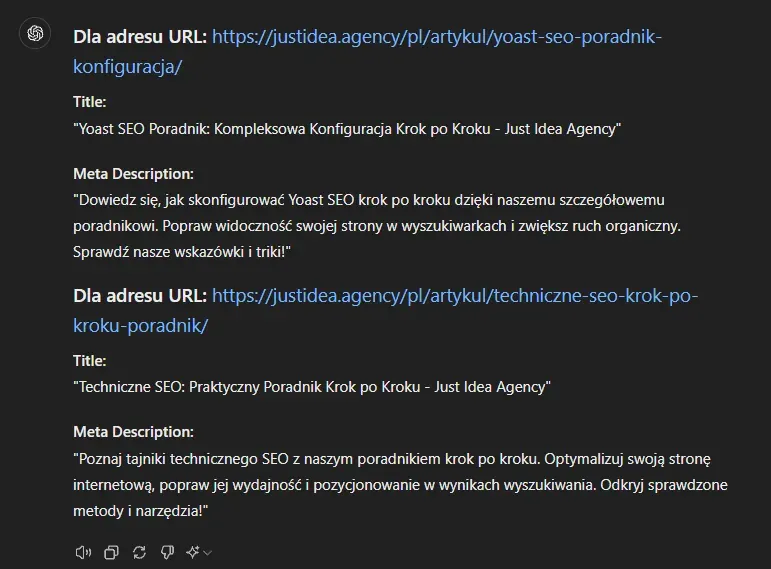
Using ChatGPT to optimise meta tags can significantly streamline the SEO process, delivering attractive, effective meta titles and descriptions that attract more users and improve a page's ranking in search results. ChatGPT offers flexibility and the ability to tailor content to specific needs, which makes it a valuable tool in every SEO specialist's toolkit.
Preparing Keyword Suggestions
Choosing the right keywords is the foundation of an effective SEO strategy. ChatGPT can be an invaluable tool in the process of preparing keyword suggestions, by supplying the data you need. For the tool to give you keyword phrases, you need to:
- Provide the topic of the site
- Indicate the most important areas
- Provide a URL (or a pool of them) to generate keyword suggestions
Prompt:
Please generate a list of keyword suggestions for the site/URLs: […]
Result:
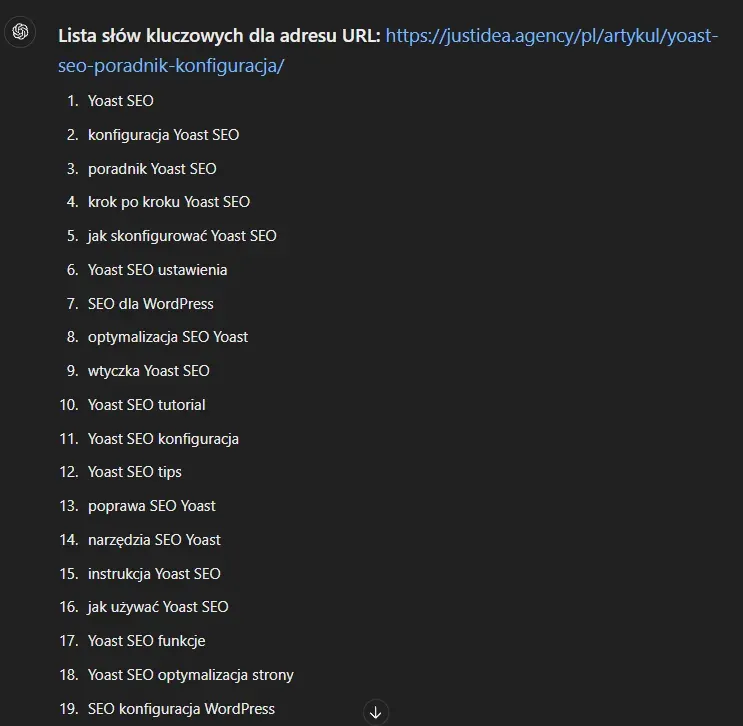
ChatGPT can significantly simplify the process of preparing keyword suggestions, providing inspiration, analysing competitors, suggesting synonyms and tracking trends. This allows you to effectively optimise content for SEO, attracting more users and improving your website's visibility in search results.
Analysing Competitor Keywords
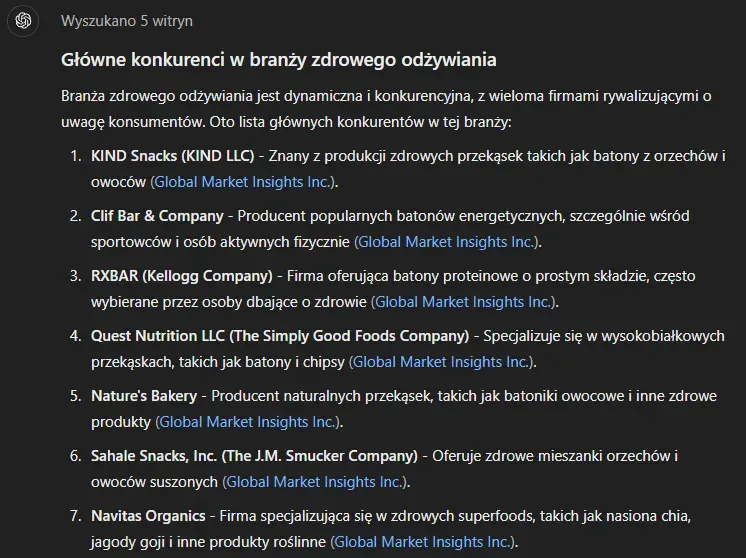
Analysing the keywords used by competitors is one of the key elements of keyword analysis in SEO, helping you understand which phrases are worth focusing on to increase your visibility in search results. ChatGPT can be used as a tool to support this process, providing valuable information about competitors' strategies and helping identify potential opportunities in the market. The first step in analysing competitor keywords is identifying the main competitors in a given niche.
- List of competitors: ChatGPT can help you build a list of competitors by analysing the industry and pointing out companies that rank highly in search results for key phrases.
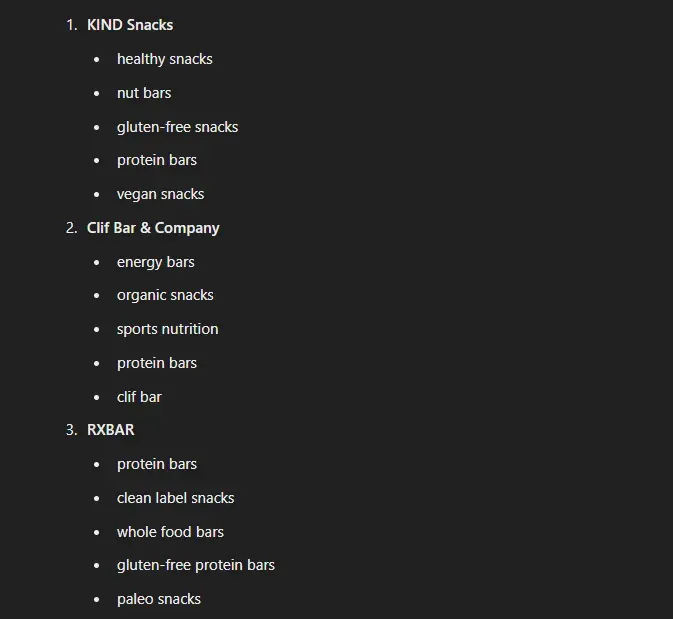
- Competitor profile: Based on the data provided, ChatGPT can generate a competitor profile, indicating which keywords are worth paying attention to.
Prompt 1:
Please provide a list of the main competitors in the healthy eating industry.
Result 1:
Prompt 2:
For the competitors listed below, please prepare a list of the keywords they rank for.
Result 2:
Determining Keyword Intent
Determining keyword intent (also known as user intent) is a key element of an effective SEO strategy. Intent refers to the goal a user wants to achieve when typing a specific keyword into a search engine. ChatGPT can help analyse and determine keyword intent, allowing you to better match content to user needs. ChatGPT will help you identify the following types of intent:
- Informational: The user is looking for information on a topic (e.g. "what is healthy eating").
- Navigational: The user wants to find a specific page or resource (e.g. "healthy eating homepage").
- Transactional: The user is ready to take action, such as making a purchase (e.g. "buy healthy food online").
- Commercial: The user is comparing products or services (e.g. "best healthy food online shop").
Prompt:
For the keywords listed below, please tell me their intent: [keyword] [..]
Result:
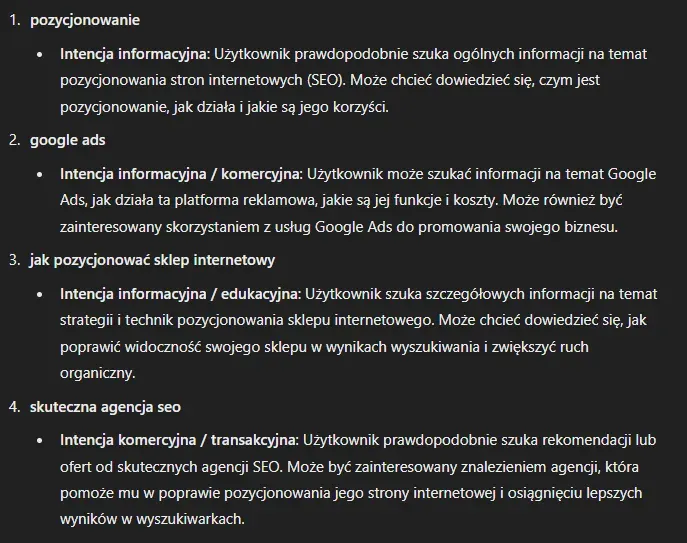
Determining keyword intent with ChatGPT allows for more precise matching of content to user needs, which can lead to better SEO results. By understanding user intent, you can create content that not only attracts traffic, but also engages and converts users.
Preparing Blog Topic Suggestions
Creating engaging, valuable blog content is a key element of a content marketing strategy. ChatGPT can be an extremely helpful tool in the process of generating blog topic suggestions, allowing you to regularly deliver fresh, interesting content for your readers. The tool can help analyse keywords and current trends, allowing you to choose topics that are popular and have high potential to attract traffic.
- Keyword research: Enter keywords related to your industry, and ChatGPT will generate a list of potential blog topics.
- Trend tracking: ChatGPT can analyse current trends and suggest topics that are timely and generating a lot of interest.
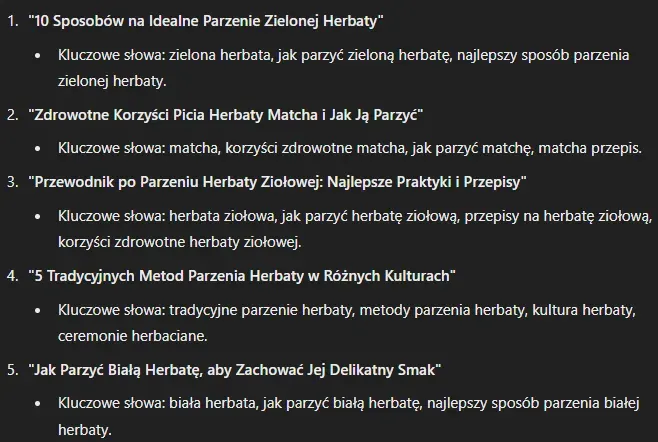
Prompt:
Please suggest blog topics on the subject of [topic], based on current trends and popular keywords.
Result:
Generating Subheading Suggestions for a Blog Article
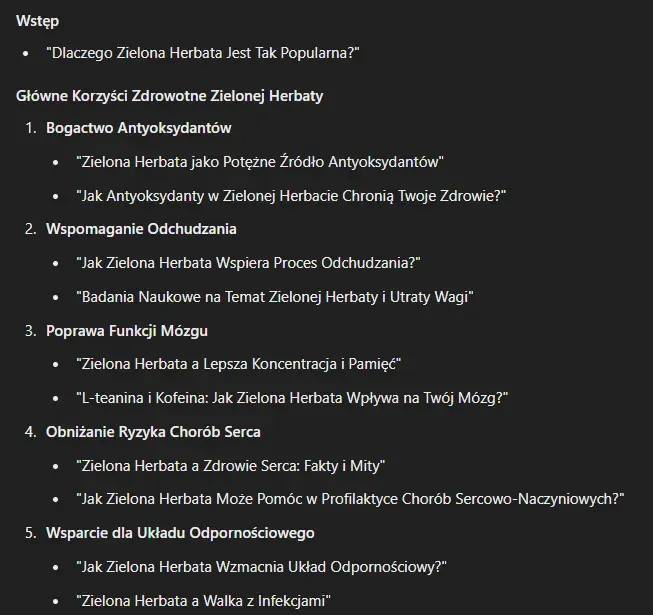
Subheadings are a key element of a blog article, since they help organise content, improve readability and grab readers' attention. ChatGPT can be used to generate subheading suggestions that are both engaging and informative.
- Introduction and Summary: Generating subheadings for the introduction, summary and the article's main points.
- Topic Sections: Subheading suggestions for the different thematic sections of the article.
Prompt:
Please suggest subheadings for an article about the health benefits of drinking green tea.
Result:
Optimising Existing Text for Chosen Keywords
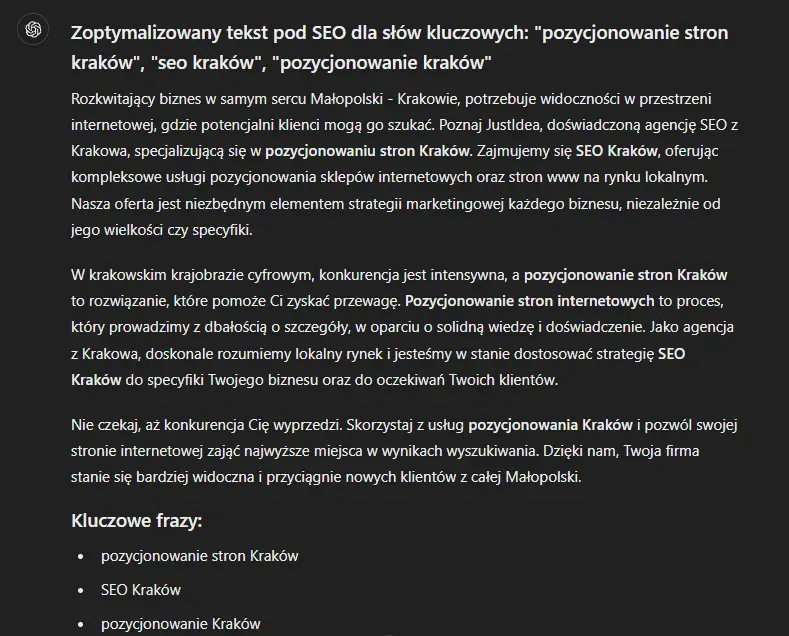
Optimising existing text for chosen keywords is an important step in improving a website's visibility in search results. ChatGPT can help with this process, providing guidance and concrete suggestions for changes that will improve the SEO performance of your content.
- Content analysis: Checking which keywords are currently used in the text and whether they match the intended target phrases.
- Keyword selection: Choosing keywords with the right intent and popularity that fit the content of the article.
Prompt:
Please optimise the text below for SEO for the keywords listed:
Result:
Creating SEO Content Outlines
Creating SEO content outlines is also an important part of a content marketing strategy, helping structure and organise articles so that they are both readable and optimised for search engines. ChatGPT can support this process, offering guidance and suggestions on article structure and the inclusion of relevant keywords.
- Choosing a topic: Pick a topic that is relevant to your industry and interesting to your audience.
- Keyword selection: Carry out keyword research to find phrases with the right intent and popularity.
The outline should include an introduction, the article's main points, and a summary. Each section should be clearly defined and include appropriate subheadings.
- Introduction: Present the topic and its significance.
- Main Points: Split the article into sections, each covering key information.
- Summary: End the article with a short summary and encourage further engagement.
Prompt:
Please help me create an SEO content outline for an article about the health benefits of meditation.
Result:
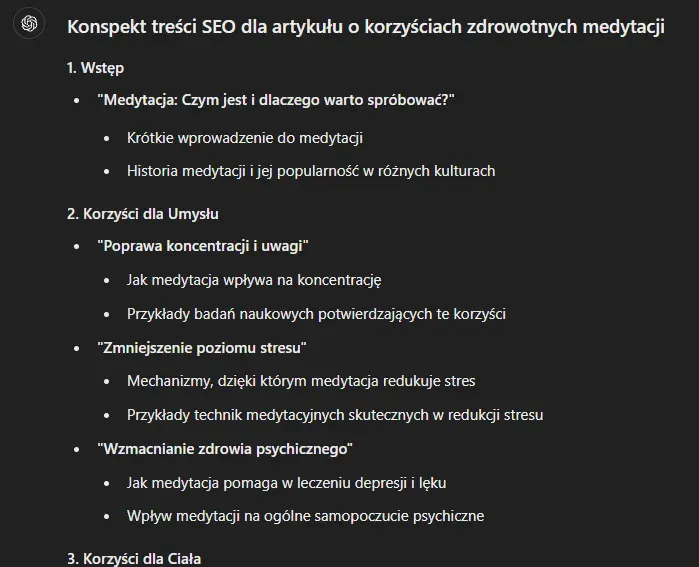
Creating SEO content outlines with the help of ChatGPT can significantly streamline the process of planning and writing articles. Outlines provide structure and clarity, making it easier to integrate keywords and multimedia elements, which ultimately leads to better search rankings and higher reader engagement.
Generating Product Descriptions
Creating attractive, persuasive product descriptions has a major impact on e-commerce success. ChatGPT can be extremely helpful in generating product descriptions that are both informative and optimised for SEO, increasing your chances of attracting potential customers and improving conversion.
To generate a description for a given product, you need to provide its details. Here is an example:
- Motor power (e.g. 1000W)
- Jug capacity (e.g. 1.5 litres)
- Number of speeds and modes (e.g. 5 speeds, pulse mode)
- Materials (e.g. stainless steel, BPA-free plastic)
- Additional features (e.g. ice-crushing function, easy cleaning)
- Warranty and service (e.g. 2-year warranty)
It is also worth defining a structure:
- Introduction: A short opening that grabs attention and encourages further reading.
- Main features: List the product's key features.
- Advantages and benefits: Describe in detail what benefits the product delivers.
- Additional information: Provide extra information such as usage instructions, warranty details and customer reviews.
Prompt:
Please prepare a product description based on the guidelines below […]
Result:
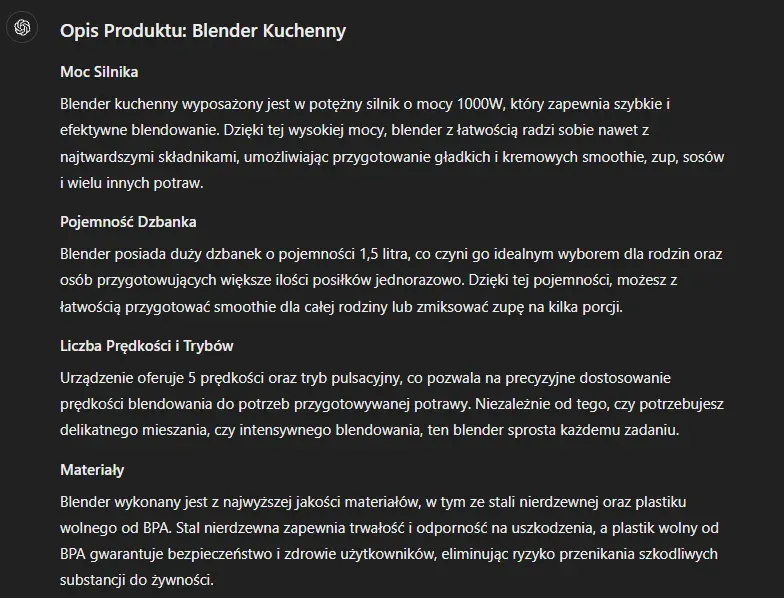
Generating product descriptions with the help of ChatGPT can significantly increase their appeal and effectiveness. By gathering key information, creating a clear structure, integrating keywords, adding multimedia, and monitoring and updating content, you can create descriptions that grab customers' attention and increase conversions.
Creating Graphics
Creating attractive, functional graphics is the foundation of an effective marketing strategy, better UX (user experience) and higher user engagement. ChatGPT can support this process, offering guidance and suggestions on various aspects of creating graphics, from concept to execution. ChatGPT can help create graphics for:
- Blog posts
- Sponsored articles
- Website copy
- Creating guides
- Creating presentation graphics
Prompt:
Generate an image showing […]
Result:

Creating graphics with the help of ChatGPT can make the process significantly easier, from concept and planning, through choosing tools, to creating, editing, testing and optimising. Well-designed graphics can boost user engagement, improve content readability and strengthen brand messaging. With the right tools and strategies, you can create attractive, effective graphics that grab attention and deliver measurable benefits.
How to Prepare alt="" and title="" for an Image Using ChatGPT
Optimising images on a website includes adding appropriate alt and title tags, which help search engines understand image content and improve site accessibility. ChatGPT can be used to create these tags so they follow SEO best practices. Here is how to do it:
Prompt:
Please generate alt and title tags for an image showing a person washing their hands under running tap water.
Result:
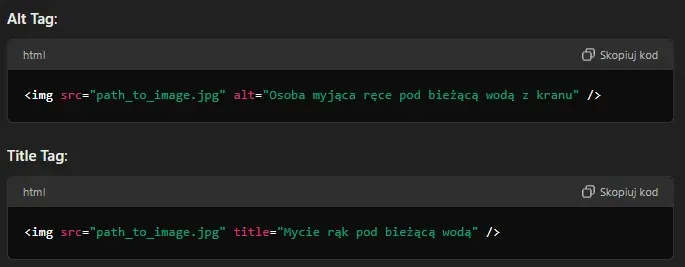
Adding appropriate alt and title tags to images is an important part of SEO optimisation. ChatGPT can be a helpful tool for generating these tags, offering precise, relevant descriptions that improve your website's visibility and accessibility. This makes the process of creating and optimising tags faster and more effective.
Summary
Using ChatGPT in an SEO strategy opens up new possibilities and offers numerous benefits that can significantly affect your website's visibility and effectiveness. Thanks to its advanced functions and natural language processing capabilities, ChatGPT can support various aspects of SEO work, from creating and optimising content to competitor analysis and keyword generation. Integrating ChatGPT into your SEO work can significantly streamline your processes, increasing efficiency and saving time. With this tool, you can create more engaging, valuable, optimised content that attracts more users and improves your page's ranking in search results. Using AI in SEO is becoming not just practical, but essential in today's fast-moving world of online marketing.
Also Check Out: