














What Should an SEO Audit Include?
An SEO audit is an essential tool for any website that wants to increase its visibility in search results and attract more organic traffic. A good SEO audit includes a detailed analysis of the technical aspects of the site, content quality, link structure and many other factors that affect its ranking in Google. Carrying out a comprehensive SEO audit of a website lets you identify its weak points, develop corrective and optimisation strategies, and ensure the site complies with the latest search engine guidelines. In this article, we'll show you exactly what an SEO audit should include to deliver measurable benefits and improve website positioning.

What Is an SEO Audit?
An SEO audit is a comprehensive analysis of a website aimed at assessing its compliance with search engine guidelines and identifying areas that need optimisation. This process covers both the technical and content aspects of the site, and its goal is to increase the site's visibility in search results, improve its functionality and provide a better user experience.
During an SEO audit, elements such as page loading speed, mobile usability, heading structure and the quality of backlinks are examined, among others. Content and keyword analysis allows you to optimise the content, which in turn translates into better positions in Google search results. It's equally important to check the link profile to make sure the site is supported by high-quality external and internal links.
Why Is It Worth Doing an SEO Audit?
Regularly carrying out an SEO audit is key to maintaining and improving a website's position in search results. It's worth investing in an SEO audit, because the changes introduced can:
- increase visibility in search results;
- improve the user experience;
- detect UX errors that previously went unnoticed;
- identify errors that were previously overlooked but have a significant impact on SEO;
- help you monitor and analyse your competitors;
- help optimise your marketing costs.
Goals and Benefits of an SEO Audit
Below are the main goals and benefits of carrying out a search engine audit.
Improving Website Visibility
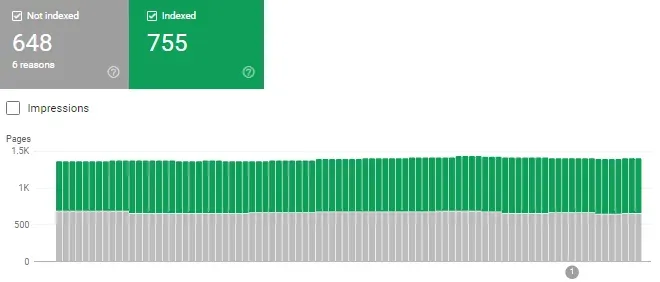
The main goal of an SEO audit is to increase online site visibility in search results. Visibility is a key element that affects how often users will visit your site.
Improving visibility involves optimising content, improving site structure and eliminating technical problems that can make it harder for search engine crawlers to index the site.
Thanks to improved visibility, you can increase the number of site visits, achieve better positions in search results for key phrases and increase the chances of reaching potential new customers.
Increasing Organic Traffic
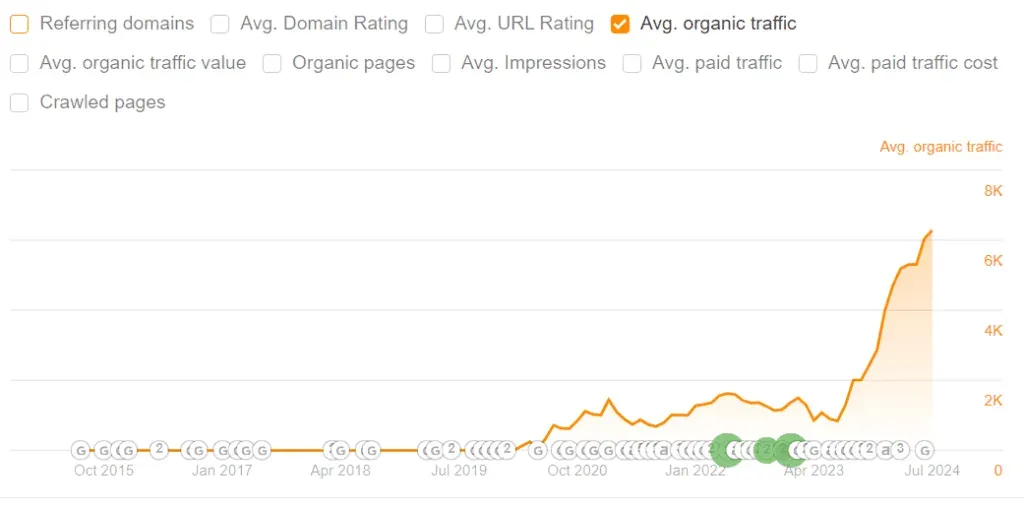
Organic traffic is site visits coming from free search results. An SEO audit helps identify and implement strategies that will attract more users to the site without having to pay for adverts.
This can reduce the costs associated with paid advertising campaigns. An additional benefit is the ability to increase the quality of traffic, because users who reach the site organically are often more engaged. A site that ranks high in search results builds greater user trust, which translates into a wider group of new, loyal visitors.
Optimising Site Performance
An SEO audit lets you analyse and optimise technical aspects of the site, such as loading speed, code structure, mobile usability and the elimination of errors that can affect the user experience.
As a result, the site loads faster, which improves the user experience and reduces the bounce rate. Better compatibility with different devices increases the site's accessibility, and eliminating technical errors has a positive effect on its position in search results.
Understanding User Behaviour
An SEO audit also includes analysis of user behaviour on the site. This helps you better understand how users interact with the site, what content interests them and what actions they take. It allows you to better tailor the content and structure of the site to users' needs, increase the conversion rate by optimising purchase paths, and identify the most effective traffic sources and marketing strategies.
When Is It Worth Doing an SEO Audit?
When building a new website, it's worth doing an audit to make sure all elements comply with SEO rules. An SEO audit lets you check whether the site is properly optimised from the very start, which can significantly affect its visibility in search results. It's worth carrying out a technical audit to avoid problems with indexing and page loading speed.
Making Major Changes to the Site Structure
It's also worth doing an SEO audit when you're making major changes to your site structure, such as adding new sections or changing the layout. In this situation, the audit will help identify potential problems that could affect your site's visibility in search results. The audit also includes an analysis of internal and external links, which is crucial when making structural changes.
Before Starting a Site Redesign
Before starting a website redesign, it's worth carrying out an SEO audit to understand which elements are working well and which need improvement.
After Major Google Updates
Google regularly updates its algorithms, which can affect a site's ranking. After major Google updates, it's worth doing an SEO audit to check how these changes have affected your site and what needs to be improved to adapt to the new guidelines. A technical audit makes it possible to react quickly to changes and maintain high site visibility.
Key Elements: What Should an SEO Audit Include?
Analysis of SEO performance is a comprehensive process of assessing a site in terms of its performance, visibility in search results and compliance with search engine optimisation best practices. The key elements of an SEO audit include both the technical and content aspects of the site, as well as an analysis of its link profile. Understanding and optimising these elements is essential to improving the site's position in search results and increasing organic results.
Overall Visibility in Search Results
An SEO audit includes an assessment of a website's overall visibility in search engines. The audit helps identify problems that can affect positions in search results and determine how well the site is indexed by search engine crawlers.
Visibility for Specific Keywords
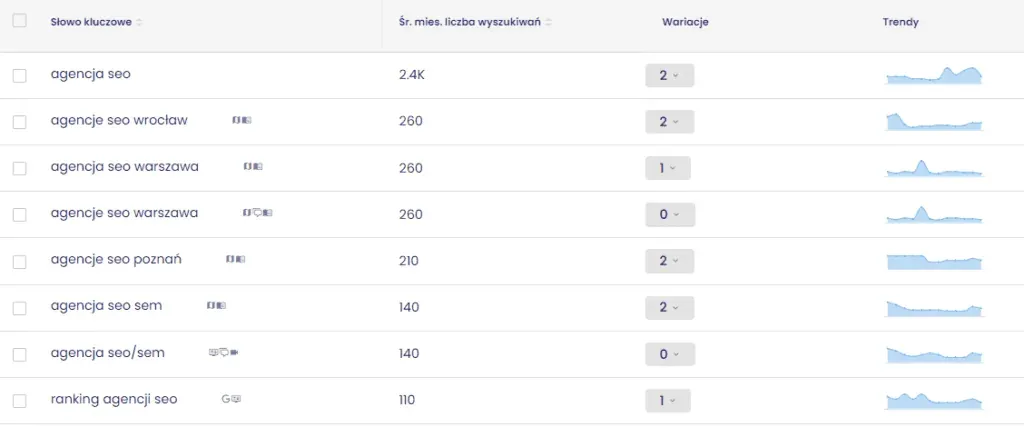
Analysing visibility for specific keywords is one of the basic elements of an SEO audit. This analysis lets you check which key phrases the site is visible for and what changes could improve the results.
Keyword Position History
An SEO audit also includes an analysis of keyword position history, which allows you to track ranking changes and identify trends. This analysis helps you understand which SEO strategies have been effective and which need improvement.
Organic Traffic to the Website
Analysing organic traffic to a website is an important element of every SEO audit. It helps you understand where the traffic comes from and which content attracts the most users.
Conversion Rate
The conversion rate is a key indicator of a website's success and shows how effectively the site turns visitors into customers, and what changes could improve this rate. It's worth doing an SEO audit to identify conversion barriers and develop a strategy to eliminate them.
Number of Link Clicks
Analysing the number of clicks on links leading to a website is an important element of an SEO audit. It lets you assess the effectiveness of link building activities and identify which traffic sources are the most valuable. The audit also makes it possible to assess the quality of inbound links.
Comparison with Competitors
Comparison with competitors is an inseparable part of every SEO audit and includes information on how your site compares to the competition and what actions you can take to improve your position. Competitor analysis includes an assessment of the keywords and links used by others.
Link Building and Internal Publications
An SEO audit also includes an analysis of link building strategy and internal publications. Link building is a key SEO element that affects a site's authority in the eyes of search engines. The audit should include an assessment of the effectiveness of these activities and identify opportunities for improvement.
Statistics on Desktop and Mobile Visits
Analysing statistics on desktop and mobile device visits is another important element. It helps answer the question of which devices are most often used by users and what changes could improve the user experience across different platforms. Information about the devices used by visitors allows you to tailor the UX to the preferences of your audience.
Charts Showing Site Visibility and the Number of Keywords in the TOP 50, TOP 10 and TOP 3
An SEO audit includes charts showing site visibility and the number of key phrases in the TOP 50, TOP 10 and TOP 3 search results. These allow you to visualise progress and identify areas that need improvement.

SEO Audits and AI Visibility (ChatGPT, Perplexity, Copilot, AI Overview)
More and more users are landing on sites not just from classic search results, but also from AI models and generative search. A good, up-to-date SEO audit today should also take this channel into account.
As part of this analysis, we check Google Analytics 4 for traffic coming from AI models (ChatGPT, Perplexity, Copilot) and from Bing, which is one of the main data sources for many LLMs. This lets us assess how many users actually reach the site from these sources and how they behave (time on site, conversions).
The second element is monitoring the site's presence in Google AI Overview, that is, checking which specific URLs and key phrases are cited in AI-generated answers and at what position in the organic results. Regularly building valuable content increases the chances of being cited in this way.
Technical Site Analysis
A technical SEO audit is a key element that allows you to assess the technical aspects of a site that can affect its performance and visibility in search engines. This part of the audit should include information on the HTTPS version, crawl budget analysis, indexing and server response codes.
Indexing Level and Crawling
From a technical perspective, the audit includes an assessment of the level of indexing and crawling of the site by search engine crawlers, and helps identify indexing problems such as errors in robots.txt files or sitemap issues.
HTTPS Version and Mixed Content
Checking whether the site runs on the HTTPS protocol and doesn't contain mixed content is an important element of an SEO audit and helps identify security-related problems and improve user trust in the site.
Crawl Budget Analysis
A technical SEO audit also includes an analysis of crawl budget, that is, an assessment of how search engine crawlers browse the site, and helps optimise the site structure to make the most of that budget and improve indexing.
Server Response Codes
Analysing server response codes such as 404 or 500 is a key element of a technical SEO audit. The audit helps identify technical problems that can affect the site's visibility and performance.

Assessing Page Speed
Assessing page loading speed with tools such as PageSpeed Insights. Site speed has a direct impact on the user experience and the site's visibility in search results. An SEO audit helps identify speed problems and implement optimisations.
Content Optimisation
Content optimisation is a key element of every SEO audit. It involves analysing and adjusting website content so that it's more search-engine friendly and more valuable to users. Several important activities are carried out as part of this optimisation.
Content and Keyword Analysis
Content and keyword analysis is the foundation of every SEO strategy. As part of the audit, the SEO expert carries out a detailed assessment of how well the content on the site answers users' queries and whether it's optimised for the right keywords. The audit helps identify missing key phrases and optimise existing content.

Heading Structure
Heading structure is important for both search engines and users. Correct use of headings (H1, H2, H3, etc.) helps search engines better understand the content hierarchy and makes it easier for users to navigate the site, which can have a positive effect on the site's visibility.
Content Duplication
Content duplication is a problem that can lead to search engine penalties and a drop in site visibility. An SEO audit includes identifying duplicate content on the site and developing a strategy to eliminate it. This makes the site more unique and attractive to search engines.
How Can an SEO Audit Help Eliminate Content Duplication?
We start with a thorough analysis of all the website's content. The SEO specialist uses duplicate-finding tools such as Siteliner, Copyscape or Screaming Frog to identify pages that contain identical or very similar content. These tools quickly scan the entire site and point out where duplication problems occur.
After identifying duplicate content, the SEO campaign manager assesses which of these duplicates have the greatest impact on rankings. It's important to understand which pages are most important for the SEO strategy and which problems need to be resolved first.
A strategy for eliminating content duplication can include:
- Canonical tags: use a canonical tag (rel="canonical") to tell search engines which version of the page is the original and should be indexed.
- 301 redirects: set up 301 redirects from duplicates to the original page to concentrate traffic and authority on a single version.
- Unique content: edit and rewrite duplicate content so it becomes unique and valuable to users.
- Noindex, nofollow: mark duplicate pages as "noindex, nofollow" so search engines don't index or follow them.
After implementing a de-duplication strategy, it's important to regularly monitor the site to make sure new duplicates don't appear. An SEO audit can include periodic checks of the site and updates to the strategy as needed.
Site Structure and Architecture
Site structure and architecture are crucial for SEO, affecting both how search engine crawlers index the site and the user experience. A well-planned and organised site structure lets search engines easily crawl and index content, which translates into better visibility in search results. The basic elements to check when reviewing site structure include:
- Structure hierarchy
- Navigation and internal linking
- SEO-friendly URLs
- Mobile optimisation
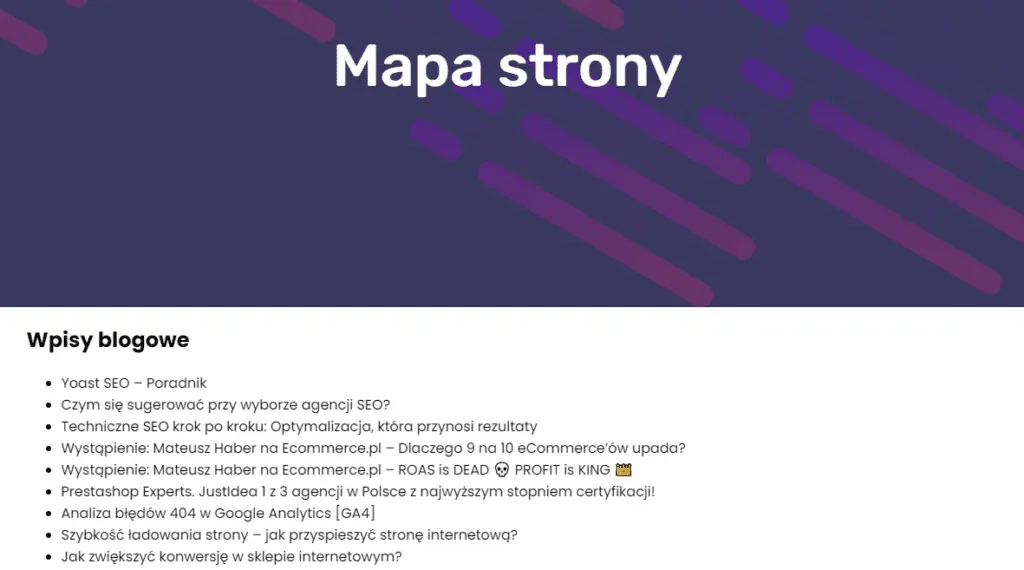
- XML sitemap
- Avoiding content duplication
- Optimisation for page loading speed
Below is an example of part of the sitemap used on justidea.agency/pl/
Category and Menu Structure
Category and menu structure is an important element of every website, affecting both the user experience and SEO optimisation. Well-organised categories and an intuitive menu help users navigate the site easily, while also allowing search engine crawlers to index the content effectively.
Internal Linking
Internal linking is a strategy involving the creation of links between pages within a single site. An SEO audit assesses whether internal links are properly placed and whether they help search engine crawlers index the site more effectively. Well-planned internal linking improves navigation and can increase the authority of individual pages on the site.
SEO-Friendly URLs
SEO-friendly URLs are easier to understand for both users and search engines. An SEO audit checks whether URLs are readable, short and contain relevant keywords. Optimising URLs can lead to better indexing of the site and improve its visibility in search results.
Link Profile Analysis
Backlinks (also called inbound links) are one of the most important ranking factors in search engine algorithms, which is why understanding and optimising your link profile is essential to improving your website's visibility.
Backlink Profile and Number
As part of the link profile analysis, the SEO report includes detailed information on the number of backlinks pointing to your site. It's important not only to have a large number of links, but also to consider their quality. Links from credible, authoritative websites are far more valuable than links from low-quality sources. The SEO report helps identify these high-quality links and suggests strategies for acquiring more.

Checking for Harmful Links
Harmful links, such as spam links or links from untrustworthy sources, can have a negative effect on your site's ranking. As part of the SEO audit, the report includes an analysis of these harmful links and provides recommendations for removing or blocking them. This can include using tools such as Google's Disavow Tool, which lets you reject unwanted links. Regularly monitoring and cleaning up the link profile is crucial for maintaining a healthy SEO profile.
Linking Methods
The SEO report also includes an analysis of the linking methods used both internally and externally. It assesses link building strategies that help acquire valuable backlinks. Good link building practices include creating valuable content that attracts natural links, collaborating with other websites, and taking part in industry events and publications.
Dofollow and Nofollow Links
The SEO report also analyses what percentage of backlinks are nofollow links versus dofollow. Nofollow links don't pass on SEO value, but they can be valuable for other reasons, such as generating traffic. Dofollow links pass on SEO value and are crucial for building a site's authority. The report provides recommendations on strategies for balancing both types of links.
Link profile analysis in an SEO report is a comprehensive study that includes assessing the quality and quantity of backlinks, identifying harmful links, analysing linking methods and comparing with competitors. Regularly refreshing the SEO audit helps maintain a healthy link profile, which translates into better site visibility in search results and increased organic traffic.
Tools Used for an SEO Audit
Carrying out an SEO audit of a website is a process that requires the use of specialist SEO tools. These tools allow for a comprehensive analysis of various aspects of the site, such as visibility in search engines, content quality, link structure and technical performance. They make it possible to carry out a thorough website audit that helps identify weak points and plan effective corrective actions. Using the right SEO audit tools is crucial for achieving better rankings and site optimisation results.
Using Google Search Console for an SEO Audit
Google Search Console (GSC) is one of the most important tools used during an SEO audit. It's a free tool offered by Google that provides website owners and SEO specialists with detailed information about their sites' visibility in Google search results. Using Google Search Console lets you identify problems and optimise the site, leading to better SEO results. Here's how you can effectively use Google Search Console in an SEO audit. The main tasks you can carry out in GSC include:
- Monitoring Site Visibility
- Identifying Indexing Problems
- Analysing Errors and Technical Problems
- Content Optimisation
- Monitoring Site Performance
- Link Reports

Tools for Link Analysis
As we've already mentioned, link analysis is one of the key elements of every SEO report, because backlinks have a huge impact on rankings in Google search results. Here are the most important tools that help assess a website's link profile:
- Ahrefs: one of the most powerful link analysis tools available on the market. It offers detailed reports on the link profile, including the number of backlinks, link quality, anchor text and link sources. Ahrefs also lets you monitor competitors' links, which is invaluable for developing an effective link building strategy.
- Majestic SEO: a tool that specialises in backlink analysis. It offers unique metrics such as Trust Flow and Citation Flow, which help assess the quality and impact of links on rankings. Majestic SEO provides detailed reports on links and their sources, and helps monitor and improve the link profile.
- SEMrush: a versatile SEO tool that also offers advanced link analysis features. It lets you track backlinks, analyse their quality, monitor competitors' link profiles and identify new link building opportunities. SEMrush provides comprehensive reports that are invaluable for planning your SEO strategy.
Tools for Page Speed Analysis
Google PageSpeed Insights
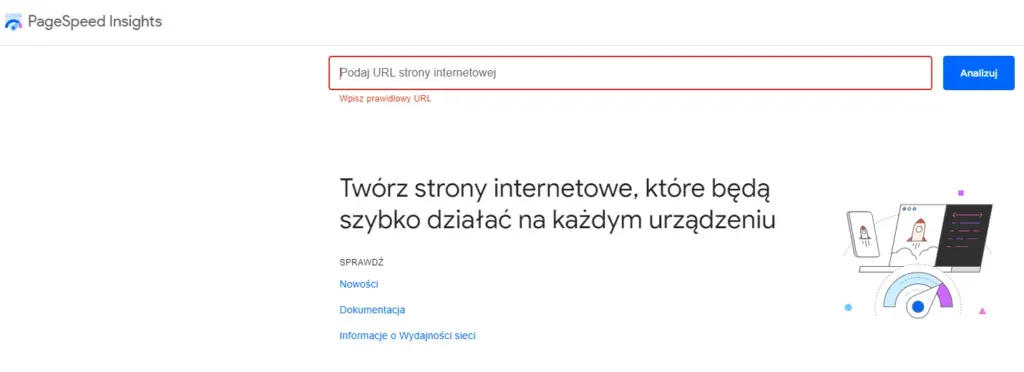
Google PageSpeed Insights is one of the most popular tools for analysing page speed. It assesses site performance on both mobile and desktop devices, providing detailed reports and optimisation recommendations. PageSpeed Insights analyses various technical aspects, such as loading time and resource size, and gives specific tips on how to improve page speed.
GTmetrix
GTmetrix is an advanced tool for analysing page speed that provides detailed reports on site performance. It measures page loading time, page size and the number of HTTP requests, and analyses various factors that affect speed. GTmetrix also provides optimisation recommendations, helping to identify and fix technical problems.
Pingdom Tools
Pingdom Tools is another popular tool for analysing page speed. It offers detailed reports on loading time, page size, number of requests and other key performance indicators. Pingdom Tools lets you monitor site performance from different locations around the world, which is especially useful for sites with a global reach.
WebPageTest
WebPageTest is a free tool for analysing page speed that offers a wide range of tests and performance metrics. It lets you run tests from different locations and browsers, providing detailed reports on loading time, resource size, page rendering and other technical aspects. WebPageTest is especially valued for its flexibility and accuracy.
Recommendations for Implementation
Conclusions and recommendations from an SEO audit of a website should include specific recommendations for corrective and optimisation actions.
After carrying out a detailed analysis of various aspects of the website, it's necessary to present clear and specific steps that need to be taken to improve ranking results. "Recommendations for Implementation" sum up the entire analysis and provide consistent conclusions, making the recommendations easier to understand and carry out.
After analysing the detailed data and results, you receive clear, concise instructions on what needs to be improved. This increases the effectiveness of communication between the SEO specialist and you or the team responsible for implementing the changes.
Recommendations for implementation also make it easier to measure the effects of the changes made. Once the recommendations have been implemented, you can carry out another audit to assess what results the actions taken have brought, and understand which recommendations had the greatest impact on improving the site's visibility in search engines and which areas need further optimisation.
SEO Action Priorities
Recommendations for implementation help establish priorities for the actions that need to be taken to optimise a website. This allows the team responsible for implementing changes to focus on the most important aspects that will bring the greatest SEO benefits. Clear guidelines also make it easier to plan and manage time and resources.
Implementation Effectiveness
When recommendations are clearly defined and placed at the end of the audit, the implementation process becomes more effective. The implementation team can easily identify specific actions to take and monitor progress on those recommendations. Clear guidelines also help avoid mistakes and ensure that all necessary changes are made in line with SEO best practices.
Why Is It Important to Carry Out an SEO Audit Regularly?
Regularly carrying out an SEO audit is crucial for maintaining and improving a website's visibility in search results. A good SEO audit not only helps identify technical and optimisation problems, but also provides valuable information needed for effective ranking of a website against search engine requirements. Here are a few reasons why it's worth carrying out an SEO audit regularly:
- adapting to changes in search engine algorithms;
- identifying new technical problems;
- optimising content and keywords;
- monitoring the competition;
- improving the user experience;
- maintaining the continuity and consistency of your SEO strategy;
- early detection and correction of problems.
Regularly carrying out an SEO audit is essential for running an effective SEO campaign, and it helps ensure that your website always complies with the latest Google guidelines and standards, which translates into its long-term success.
FAQ: Frequently Asked Questions
Can an SEO Audit Be Free?
Free online tools only give you an automatic, surface-level technical scan. A full SEO audit requires many hours of manual analysis (using tools such as PageSpeed Insights, Schema Validator and Google Search Console) and expert interpretation of the results, which is why a professional audit is a paid service.
What Does a Good SEO Audit Check?
Technical elements (indexing, speed, server response codes), on-page elements (meta tags, headings, content), the link profile, and increasingly, visibility in AI-generated results.
How Often Should You Do an SEO Audit?
At least once a year, plus additionally after major changes to the site, before a redesign, and after significant Google algorithm updates.
Is an SEO Audit Suitable for an Online Shop?
Yes. For an online shop, the audit additionally covers things such as handling out-of-stock products, category and filter structure, Product structured data, and product page optimisation.
What Are the Most Important Elements of an SEO Audit?
A comprehensive SEO audit includes technical analysis (indexing, speed, server response codes), on-page optimisation (meta tags, headings, content), the backlink profile and, increasingly, visibility in AI-generated results.
What Errors Does an SEO Audit Most Often Detect?
The most commonly detected errors are: missing or duplicate meta titles and descriptions, missing or duplicate H1 headings, 404 errors and incorrectly configured redirects, page loading speed that's too slow, and content duplication.
Can an Agency Carry Out a Technical SEO Audit?
Yes, a comprehensive technical SEO audit is a standard service offered by SEO agencies. It includes both tool-based analysis (such as PageSpeed Insights and Google Search Console) and manual verification by a specialist.
What Should an SEO Audit Report Include?
A good SEO audit report includes a summary of the problems detected, specific recommendations for implementation with priorities, and numerical data (such as visibility, organic traffic and keyword positions) that allow you to assess your starting point.
When Do You See Results After Implementing SEO Audit Recommendations?
The first changes in visibility are usually visible 3 to 6 months after implementing the recommendations, with more lasting effects after 6 to 12 months. This depends on the scope of the changes made and the competitiveness of the industry.
Check out these related articles: