














How to Effectively Increase Your CTR? Practical Tips
CTR, or click-through rate, is a key metric measuring how well your content performs in organic search results. A higher CTR means more visits to your site, which directly affects conversions and the success of your SEO strategy. In this article, we look at how to effectively increase your CTR in Google search results, analysing the most important factors that affect its optimisation.
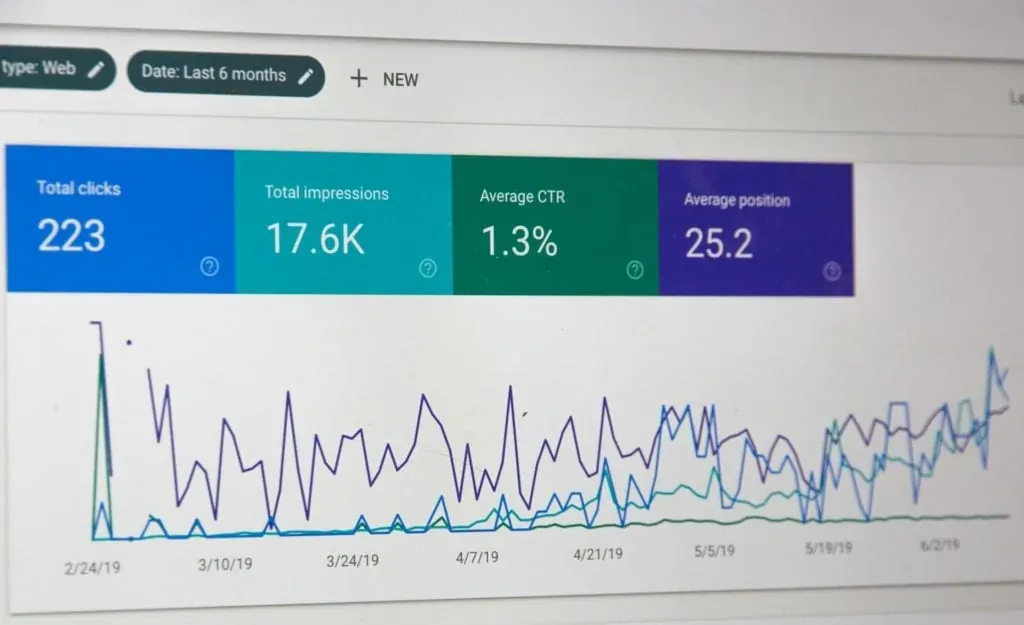
What is CTR and how do you calculate it?
CTR shows how many times users clicked a given link relative to the number of times it was shown. You can calculate it with the formula: CTR = (Number of clicks / Number of impressions) × 100%. Example: if a page appeared in search results 10,000 times and got 200 clicks, then: (200 / 10,000) × 100% = 2% CTR. In SEO, an optimal click-through rate can range from 3% to 10%, depending on your position in the SERP. The higher the position, the higher the potential CTR.
Why does a high CTR matter in SEO?
CTR has a direct effect on how well your SEO strategy performs. A high click-through rate signals to search engines that your content is valuable to users, which can help improve your rankings. Google treats CTR as one of its ranking signals, meaning pages that get clicked often have a better chance of ranking higher in the SERP. Benefits of optimising CTR in SEO:
- More organic traffic to your site,
- Better visibility in search results,
- A lower bounce rate,
- Higher conversion.
How do you check your CTR in SEO?
Before you start optimising, it's worth analysing your current click-through rate carefully and identifying the elements that need improving. CTR can vary depending on your position in the search results, your industry and the type of content. Understanding which factors affect click-through rate lets you implement changes more effectively, ones that genuinely improve your site's visibility.
Tools for analysing CTR in SEO
To effectively increase your CTR, you first need to analyse its current values carefully and work out which elements need improving. You can use dedicated analytics tools for this, which provide detailed data on the click-through rate of your organic results. Analysing these metrics helps you better understand user behaviour and adapt your optimisation strategy to their expectations.
- Google Search Console: provides data on click-through rate in your organic search results. In the "Performance" section, you can check the average CTR for individual keywords and pages.
- Google Analytics: lets you analyse CTR for landing pages and organic traffic, identifying content that needs optimising.
Regularly analysing your CTR helps you understand which pages and keywords have the greatest potential for improvement.
How to increase your CTR in organic search results
Increasing CTR in SEO requires a comprehensive approach that covers both technical optimisation and making your content more appealing in the search results. Users are most likely to click results that stand out clearly, have engaging titles and offer valuable information. In the sections below, we look at specific steps that can help increase your click-through rate.
Optimising page titles (meta title)
The page title is the first thing that catches a user's attention. It should be concise (50 to 60 characters), engaging and include a keyword. Effective techniques include:
- Using numbers ("5 ways to boost your CTR");
- Asking questions ("How can you increase your CTR in Google?");
- Tapping into emotion ("Don't make these mistakes!").
A well-optimised title should clearly state the value a user will find after clicking the result.
Effective meta descriptions
A meta description is a short description of a page shown in the search results. It should include a CTA (Call to Action) and encourage the user to click. A well-written meta description should clearly communicate the value the user will find on the page, which increases the chance of a click. It's also worth avoiding overly generic descriptions and aiming for specifics, for example by highlighting the unique features of your offer. Examples of effective meta descriptions:
- "Discover 10 ways to boost your CTR. Check out our guide!"
- "Increase your CTR and improve your site's results. Click to find out more!"
The meta description should be unique for every page and matched to the user's intent.
Implementing structured data
Structured data (schema.org) enrich your search results with extra elements that help your page stand out from the competition. Implementing it can improve your site's visibility and increase the chance of users clicking through. The right structured data also helps search engines better understand your page's content, which can have a positive effect on your ranking. It's worth implementing on your site to improve how effectively it generates traffic.
- Star ratings,
- Product prices,
- FAQs,
- Breadcrumbs.
Implementing these elements can significantly improve your CTR, because users see more useful information directly in the search results.
4. Clear, appealing URLs
A short, intuitive URL that includes a keyword increases the chance of a click. Well-optimised URLs help users understand what to expect from a page before they even click on it. Search engines also index pages with clear URLs more easily, which can have a positive effect on their visibility. Examples:
- ✅ mojastrona.pl/increase-ctr
- ❌ mojastrona.pl/index.php?id=12345
Clear URLs build trust and make users more willing to visit your site.
Optimising content for user intent
Google favours content that best answers users' queries. To improve your CTR, it's worth focusing on matching your content to search intent and providing valuable, unique information. Users click on results that seem the most helpful and best matched to their needs. That's why it's essential that content is well optimised for search and engages users from the first few seconds on the page.
- Write valuable, engaging H1 and H2 headings,
- Answer users' questions in the opening paragraphs,
- Use bullet points and bold text for key information.
If a user finds exactly what they're looking for, they're more likely to click your result.
Using A/B testing to optimise CTR
A/B testing lets you experiment with different versions of titles and meta descriptions, to see which ones generate more clicks. It's an effective optimisation method that lets you tailor your content to what users prefer. Testing helps you avoid random changes and focus on solutions that genuinely improve CTR. You can test:
- Different CTAs,
- Different keyword arrangements,
- Alternative title lengths.
Regular testing is the key to optimising CTR over the long term.
Summary
CTR is a key performance metric in SEO. Improving it requires optimising your titles, meta descriptions and content structure, and matching them to user intent. Regularly analysing your results and testing different strategies lets you achieve a higher click-through rate and improve the effectiveness of your SEO work. If you want your pages to generate more organic traffic, focus on appealing headlines, valuable meta descriptions and implementing structured data that will improve your site's visibility in search results.
Read also: