














Long-Tail SEO: Is It Worth Using?
What Is SEO?
Search engine optimisation is a key element of digital marketing, aimed at increasing a website's visibility in search results. It's the process of optimising elements of a website as well as off-site activities to improve its ranking in search engines such as Google.
One aspect of SEO is on-page optimisation, which covers changes made directly on the website. This includes optimising titles, meta descriptions, headings, content and URL structure. Before implementing the first changes, it's essential to carry out keyword analysis for the terms the site is ranking for and the terms we want it to be visible for.
What Types of Keywords Are There?
In SEO, we distinguish several types of keywords. Keywords are words or phrases that users type into search engines when looking for information, products or services. We can divide them into a few categories:
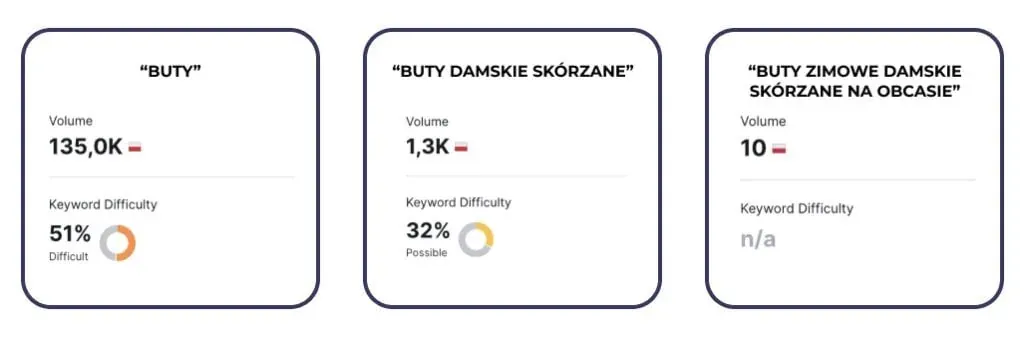
- Generic keywords: short queries, often one or two words, e.g. "shoes", "books". They are highly competitive and often hard to rank for.
- Medium-tail keywords: these keywords are a bit longer and more specific, e.g. "women's leather shoes". They have less competition than generic keywords but are still popular.
- Long-tail keywords: long, very detailed queries that are less popular but often more targeted, e.g. "women's leather shoes size 38 for winter". Long-tail keywords are less competitive, which makes them easier to rank for. On top of that, users searching for such detailed queries are often closer to making a purchase decision.
What Is Long-Tail SEO?
Long-tail SEO (long-tail optimisation) is a website optimisation strategy that focuses on ranking for, and getting traffic from, long, more detailed keywords. These keywords, while less popular and searched for less often than short, generic queries, are more specific and better targeted. This is why the strategy is particularly effective for smaller companies and niche industries, where competition for popular keywords is too fierce.
Long-tail SEO requires careful research and analysis of the right keywords, as well as creating content that closely matches user queries. Long-tail keywords usually consist of more than three words. They are specific and often relate to very detailed queries, products, services or topics. For example, instead of focusing on a generic keyword like "shoes", a long-tail strategy might focus on a keyword such as "black high-heeled women's shoes".
Key Aspects of Long-Tail SEO:
- High specificity: long-tail keywords are usually very specific. They answer detailed user queries, which makes them more relevant to specific needs and interests.
- Lower competitiveness: because of their specificity, long-tail keywords usually have less competition than more generic keywords. This makes it easier to achieve higher rankings in search engines.
- Better chances of targeting niches: long-tail SEO makes it possible to reach more niche market segments, where queries are more targeted and less well served by major competitors.
- The importance of content: to make effective use of a long-tail strategy, it's necessary to create content that closely matches these specific, long keywords. This means creating content that is not only optimised for SEO but also delivers value and answers to specific user queries.
- Comprehensive topic coverage: a long-tail strategy often involves creating more comprehensive and detailed content that covers a topic broadly, answering many related queries.
What Are the Benefits of Long-Tail SEO?
The method of ranking for long-tail keywords offers a range of benefits that can significantly affect the online success of a company or website.
- Higher conversion: long-tail keywords often answer more specific queries, which means that the users who type them are usually closer to making a purchase decision or completing a particular action. This means traffic generated by these keywords has a greater chance of converting.
- Lower competitiveness: long-tail keywords are usually less competitive than short, generic keywords. This makes it easier to achieve higher positions in search results, especially for new or niche websites.
- Better match for user needs: long-tail keywords allow for a more precise match between content and specific user queries. This lets sites better meet visitors' needs, which translates into higher satisfaction and customer loyalty.
- Greater reach in market niches: long-tail SEO makes it possible to reach niche market segments, where there may be less competition, but the traffic is highly targeted and valuable.
- Optimising for long-term trends: long-tail keywords can address long-term interests and trends, which makes this strategy effective in the long run.
- Building authority and credibility: effective ranking for long-tail keywords can help build authority in a given industry. Sites that deliver valuable answers to specific queries gain credibility and reputation among users.
- Support for other marketing strategies: long-tail SEO can be effectively combined with other marketing strategies, such as content marketing, which helps increase the overall effectiveness of online activities.
- Increased organic traffic: even though long-tail keywords generate less traffic per individual query, their sum can significantly contribute to increasing overall organic traffic on a site.
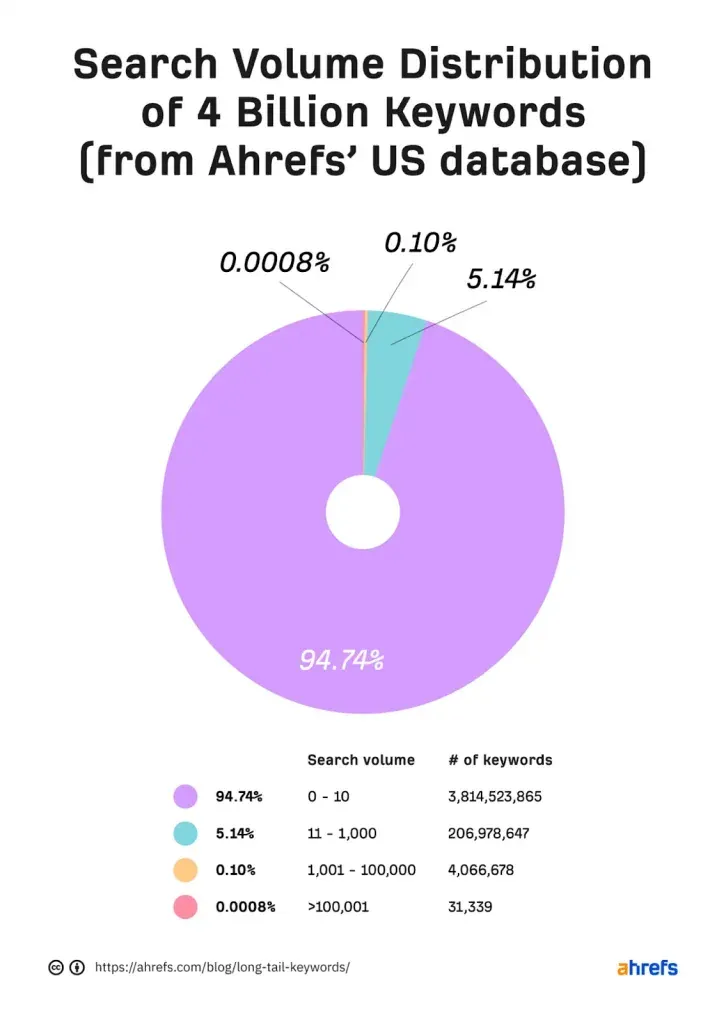
Looking at the chart below, you can see that out of the keyword database available in the Ahrefs tool, almost 95% of keywords (of which around 15% are new keywords) show fewer than 10 searches per month. It's worth noting that long-tail keywords don't always have such a low search volume, but this is a commonly seen case.
Long-tail SEO is a strategy that can bring significant benefits, especially for sites that want to reach specific groups of users with precisely matched content. It's an approach that makes it possible to achieve high effectiveness at a relatively low cost, which makes it an attractive solution within SEO.
How to Find Long-Tail Keywords?
Finding effective long-tail keywords is key to success in SEO. To find them, it's worth using tools that help identify less competitive but valuable keywords. Here are a few recommended tools:
- Google Keyword Planner: a free tool from Google, ideal for getting started. It helps identify keywords related to your core keywords, giving insight into their popularity and competitiveness.
- SEMrush: an advanced tool that offers detailed keyword analysis, including long-tail keywords. Its features allow you to discover niche keywords and analyse competitors' strategies.
- Senuto: particularly valued in the Polish market, it not only lets you search for long-tail keywords but also offers detailed analyses and suggestions that help increase a site's visibility in search results.
- Ahrefs: this tool offers an extensive keyword database and in-depth analysis, which is useful for finding long-tail keywords. It also lets you track rankings and gain insight into competitors' SEO strategies.
- Answer The Public: a unique tool that generates questions and phrases related to the keywords you provide. It's an excellent way to find long keywords that are frequently asked by users.
- Ubersuggest: a tool that offers keyword analysis, long-tail keyword suggestions and insight into competitors' SEO strategies. It's useful, especially for smaller companies and individual entrepreneurs.
It's worth remembering that the key to using these tools effectively is regularly monitoring trends and adapting your SEO strategy to changing conditions. Careful analysis and continuous experimentation with different long-tail keywords can significantly improve visibility and traffic on your website.
Also Check Out: