













Performance Max is one of the most automated campaign types in Google Ads. It brings together multiple advertising channels within a single solution and uses algorithms to optimise performance. What does that look like in practice? Find out how PMax works, which elements the advertiser prepares, what the system is responsible for, and when it's worth using this format.
What Performance Max actually is
Performance Max (PMax) is an AI-based campaign type in Google Ads that runs ads across all Google channels from a single place: Search, YouTube, the Display Network, Gmail, Discover and Maps. Instead of creating separate configurations for each channel, the advertiser sets the goal, the budget and supplies the ad materials, while the system itself chooses where to show ads and to whom, aiming for the best possible results.
PMax replaced the previously available Smart Shopping and Local campaigns, combining their features into a single format. What sets it apart most from older solutions is its heavy reliance on algorithms. Many tasks that used to require manual optimisation are now handled directly by the system.
How is it different from classic campaigns?
In a traditional search campaign, it's the advertiser who chooses the keywords, bids and placements. In Performance Max, many of these decisions shift over to Google's side, and the person running the account mainly sets the goal and supplies the materials. In exchange for less control, they gain the ability to run activity across multiple channels from a single campaign, plus automatic optimisation. It's a solution that's more convenient to manage, but one that gives you less influence over individual settings.
How Performance Max works
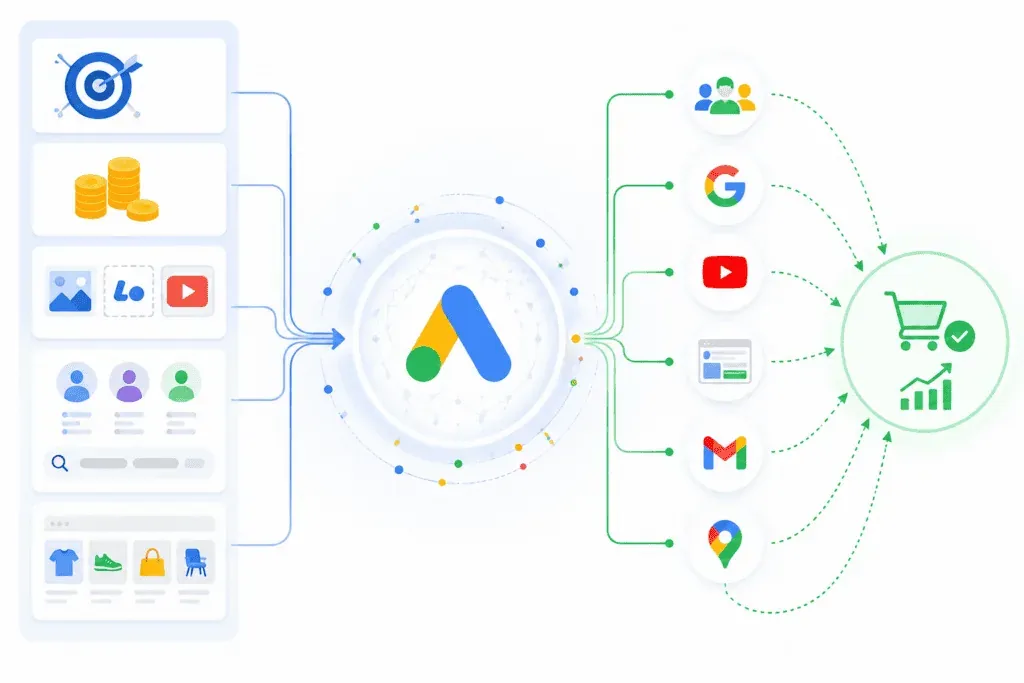
The easiest way to understand how Performance Max works is to split it into elements supplied by the advertiser and tasks carried out by the algorithm. The advertiser sets the framework, and the system operates within it.
What the advertiser supplies, and what the algorithm does
On the advertiser's side, there are mainly four elements: the campaign goal (for example, sales or lead generation), the budget together with a bidding strategy, a set of ad materials, and guidance for the algorithm, namely audience signals and so-called search themes. Google's system makes the rest of the decisions: it chooses the audience, placements, ad format and timing, and then shifts the budget to wherever it predicts the greatest chance of conversion.
| The advertiser supplies | Google's algorithm decides |
|---|---|
| Campaign goal: sales, leads | Audience selection |
| Budget and bidding strategy | Placements, i.e. channels |
| Ad materials, i.e. asset groups | Ad format and variant |
| Audience signals and search themes | Timing and budget allocation |
Assets and asset groups
In Performance Max, you organise ad materials into what are called asset groups. Each one contains headlines, descriptions, images, a logo and video materials. Based on these, the algorithm creates ads tailored to a specific placement: one variant appears in Search, another on YouTube, and yet another in Gmail. The more varied, good-quality materials the system gets, the more combinations it can test.
Audience signals and search themes
The algorithm doesn't start completely from scratch. You point it in the right direction through audience signals (such as customer lists or interest groups) and search themes, meaning terms and intents that match the way customers phrase their queries. Since 2025, you can add up to 50 such themes to a single asset group. They don't act as rigid keywords: they're a hint that the system gradually expands with similar queries over time.
Goal and bidding strategy
Every Performance Max campaign pursues a specific goal measured by conversions, most often maximising their number or value, optionally with a target CPA (cost per acquisition) or ROAS (return on ad spend). In e-commerce, the campaign is usually linked to a product feed from Google Merchant Center, so ads show specific products along with price and availability. Without correctly configured conversion tracking, automation loses its point of reference and ends up optimising without a real basis.
Google Ads Performance Max: which channels it appears in
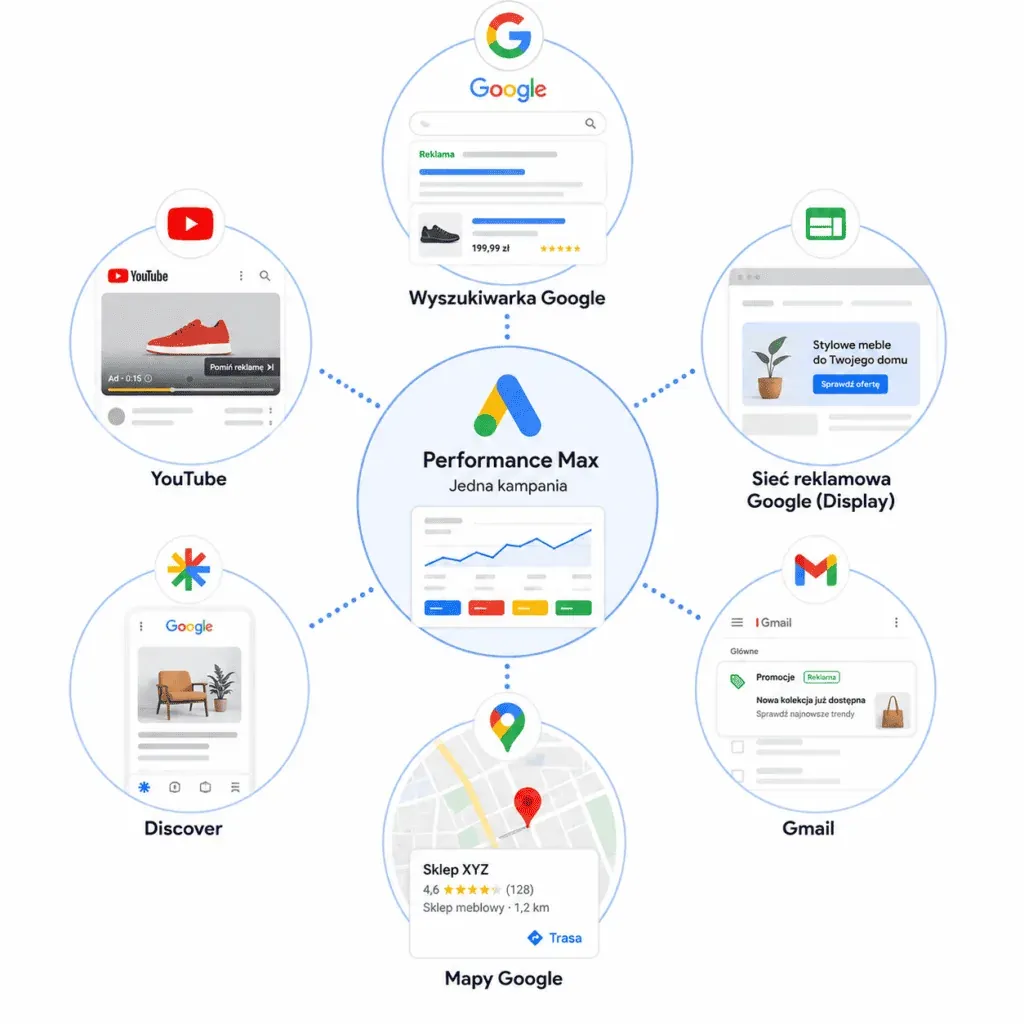
A single campaign covers almost the whole of Google's advertising surface. Ads can appear in the following channels:
- Google Search: text ads in search results, plus, in e-commerce, product ads with an image, name and price, appearing above the results and in the Shopping tab,
- YouTube: video spots shown before and during videos, and in the recommended content section; the format depends on the materials supplied, and if you don't have your own video, the system can put together a simple clip from the images you've uploaded,
- Google Display Network: image and text banners across millions of partner sites and mobile apps, often used for remarketing,
- Discover and Gmail: ads woven into the recommended content feed in the Google app and at the top of tabs in the Gmail inbox, looking similar to ordinary feed items,
- Google Maps: promoted places and pins shown in navigation and local results, used for goals related to visiting a physical store.
How much budget goes to each channel is decided by the algorithm, guided by predicted effectiveness. This used to be a largely opaque area, but since 2025 the channel performance report shows where impressions and conversions actually come from. The advertiser's influence remains indirect: more video materials increase the chance of appearing on YouTube, and well-chosen search themes increase the chance of appearing in Search.
How to launch a Performance Max campaign
Start by choosing the campaign goal and setting up conversion tracking: without it, the algorithm has nothing to optimise for. Next, set the budget and bidding strategy, deciding whether the system should maximise the number of conversions or their value. The next stage is preparing asset groups, meaning sets of headlines, descriptions, images and video materials. On top of that come audience signals and search themes, and, for a store, a product feed from Merchant Center too. Once published, the campaign enters a learning phase, and only once that's finished can you talk about reliable results.
The learning phase: the campaign's first weeks
Once launched, Performance Max needs time to gather data and work out which combinations of materials and audience groups deliver the best results. In practice, this period lasts anywhere from a week or two to several weeks, depending on how many conversions the account records. Results can fluctuate significantly during this time, so judging the campaign after just the first few days usually leads to the wrong conclusions. A common mistake at this stage is making too many changes: every major modification to the budget, goal or materials resets the learning process and delays reaching stable results. A more effective approach is to give the campaign time to settle, then make adjustments based on the reports.
When it's worth choosing Performance Max
Automation delivers the best results where it has enough data to learn from and enough material to optimise.
Where Performance Max works best
The format works particularly well in e-commerce with a product feed and conversion history, giving the system a basis for making sound decisions and a wide assortment to promote. It also performs well for lead generation, and in situations where you want a presence across multiple channels without running several separate campaigns.
When it's worth choosing a classic campaign instead
PMax tends to be less effective in the early stages, with a low number of conversions, and also for activity that needs tight control, for example when you need to separate branded search traffic from the rest. Without that separation, results can look better than they really are, because the campaign picks up easy clicks from users who were searching for that brand anyway. When you need full control over individual phrases, a classic search campaign run alongside it is often the better choice.

Control and transparency: what changed in 2025
Performance Max has relied on a high level of automation from the start, which raised advertiser concerns for a long time. The most common complaints were limited data visibility and little ability to influence how the campaign performed.
What new features has Google introduced?
The situation changed in 2025, when Google rolled out a range of new features. These included campaign-level negative keywords (up to 10,000 entries), a full search terms report, channel-level statistics, brand exclusions, and additional options related to demographics and devices. This makes it easier to see which queries the budget is going towards and to cut traffic that isn't delivering the expected results.
What limitations still apply?
This hasn't changed the solution's basic principles, though. A large part of optimisation still happens on the system's side. The new features increase transparency and give you more ways to influence results, but they don't amount to full management freedom. The channel report shows traffic sources, but it doesn't let you allocate budget separately between individual placements. Keyword exclusions only apply to Search and Shopping campaigns, and search themes remain a hint for the algorithm rather than a fixed setting.
The direction of development is clear, though: Google is gradually increasing access to data and giving advertisers more optimisation tools, while keeping automation at a high level.
Performance Max is only as good as the data you give it
Performance Max is neither a ready-made, one-click solution nor a threat to a specialist's job: it's a tool that amplifies good preparation and exposes its gaps. The algorithm needs solid foundations: correctly counted conversions, valuable materials, well-thought-out audience signals and, for e-commerce, a polished product feed. When these elements are in place, the campaign is capable of delivering satisfying results. Otherwise, it just spends the budget faster.
Choosing the right goal, data quality and how you interpret the results matter more than simply launching the campaign, because the data shown in the dashboard doesn't always reflect the full picture of its effects.
Interested in this topic? Also worth checking:
- Optimising Google Ads campaigns step by step
- ROAS is a myth. Let's stop telling stories and focus on the data
- Over €180,000 in revenue in 30 days? See how we did it!
FAQ
How does Performance Max differ from a classic search campaign?
In a search campaign, it's the advertiser who chooses keywords, bids and placements. In Performance Max, they mainly set the goal and supply the materials, and the algorithm makes the rest of the decisions. In exchange for less control, they gain a presence across multiple channels from a single campaign.
How long does the Performance Max learning phase last?
Usually anywhere from a week or two to several weeks, depending on how many conversions the account records. Results can fluctuate during this time, so it's best to judge the campaign and make major changes only once results have settled.
Does Performance Max work without a product feed?
Yes, a product feed isn't required: you can run the campaign on ordinary asset groups (headlines, descriptions, images, video) for goals like lead generation. A Merchant Center product feed only becomes essential in e-commerce: it's what makes ads show specific products with price and availability, and it gives the algorithm richer material to optimise.

Have a question about this article? Write to us.